


China's Hardware Exports Beyond Traditional Markets
Three shifts are changing where Chinese hardware exports go. The first is the most visible: demand is no longer concentrated in Western Europe and North America. The second is harder to see: the categories moving to new destinations are not just low-cost basics but regulation-aware, higher-mix product lines. The third shift matters most for buyers: suppliers are reorganizing production, certification, and pricing strategies around this new map. If you source hand tools, power tools, fasteners, building hardware, or garden equipment, the traditional destination lens no longer matches the trade floor.

1. China's hardware export mix is no longer a single-market story
China has spent more than two decades building scale in classic export lines: hand tools, power tools, fasteners, architectural hardware, garden tools, and welding supplies. The volume is still there, but the destination mix is becoming more fragmented. Mature markets such as the United States and the European Union remain significant, but tariff escalation, selected anti-dumping measures, and stricter conformity rules have made single-market concentration riskier for both exporters and importers [1].
At the same time, buyers from the Gulf, ASEAN, Africa, and Latin America are appearing in larger numbers in sourcing meetings [2]. Their requirements are not identical to those of buyers in Detroit or Stuttgart. Many emphasize local certification, mixed-container capability, packaging durability, and practical payment terms alongside unit price.
2. Where the next demand is coming from
The new destination map is not a single bloc. We see distinct demand drivers in each region, and those drivers change which products make sense and how suppliers need to prepare.
| Region | Demand driver | Categories to watch | Buying implication |
|---|---|---|---|
| Middle East and Gulf | Infrastructure, construction, and maintenance projects | Fasteners, welding supplies, power tools, building hardware | Regional marks such as SASO/G-mark, Arabic labeling |
| Southeast Asia | Manufacturing relocation, construction, and repair | Hand tools, power tools, fasteners, machinery accessories | Country rules such as SNI or SIRIM, mixed SKU flexibility |
| Africa | Urbanization, housing, mining, and agriculture | Durable hand tools, building hardware, stored-energy tools | Price-to-durability balance, smaller packaging formats |
| Latin America | Agriculture, renovation, and industrial maintenance | Garden tools, power tools, fasteners | Spanish/Portuguese labeling, local electric standards |
| Central Asia and the Caucasus | Corridor construction and infrastructure | Construction tools, building hardware, welding equipment | Transit documents, broad voltage requirements |
This is a working map, not a guarantee. The critical work is confirming the exact standard and registration path for each market.

3. Trade-policy fragmentation is the real engine
Trade data show the center of gravity has become more multipolar [3]. China’s customs office publishes monthly product-level data that buyers use to track hardware shipment momentum [4]. But aggregate trends hide three frictions that matter more than destination headlines.
First, tariff and anti-dumping measures push buyers toward multiple supplier origins rather than one comfortable default. Second, non-tariff measures such as local registration, certification, and importer eligibility have become the real gatekeepers. Third, logistics and settlement routes now decide the landed cost: buyers compare customs time, payment channels, and consolidation options instead of negotiating FOB price alone.
4. How to source for the new export map
Start with destination compliance, not product spec. The same tool can be commercially viable in one market and expensive to clear in another.
Ask for a market-specific documentation matrix before you ask for a price list.
Where possible, select multi-market SKUs to reduce testing, packaging, and labeling complexity.
Verify packaging for heat, humidity, and rough handling rather than assuming standard export cartons will pass.
Confirm electric variants such as voltage, plug type, and frequency for power tools and powered equipment.
Build a regional supplier shortlist instead of relying on one global default.
If you want to test a supplier’s destination readiness before you travel to Shanghai, our buyer services team can help. Contact trista.ming@koelnmesse.cn or +86 21 6390 6161-832 with your target market and category; we can point you to relevant exhibitor categories and matchmaking support.
5. Mistakes that make new-market sourcing more expensive
New-market buyers often arrive with the right interest but the wrong checklist. The most common errors are treatable.
First, many buyers treat emerging markets as one bloc. A Saudi import file, a Nigerian SONCAP file, and an Indonesian SNI file are not interchangeable. Second, some assume CE, UL, or GS certificates automatically transfer. They help signal testing maturity, but they do not replace country marks. Third, buyers sometimes negotiate only FOB price when the real costs sit in inspection, transit damage, and returned goods.
Two formal markers are useful here. The EU Machinery Regulation (EU) 2023/1230 shows how mature-market compliance continues to tighten, even as new markets add their own systems [5]. At the same time, infrastructure-led demand in the Middle East and parts of Africa is supported by public investment flows tracked by the World Bank [6].
6. Why CIHS 2026 is a practical test of the new map
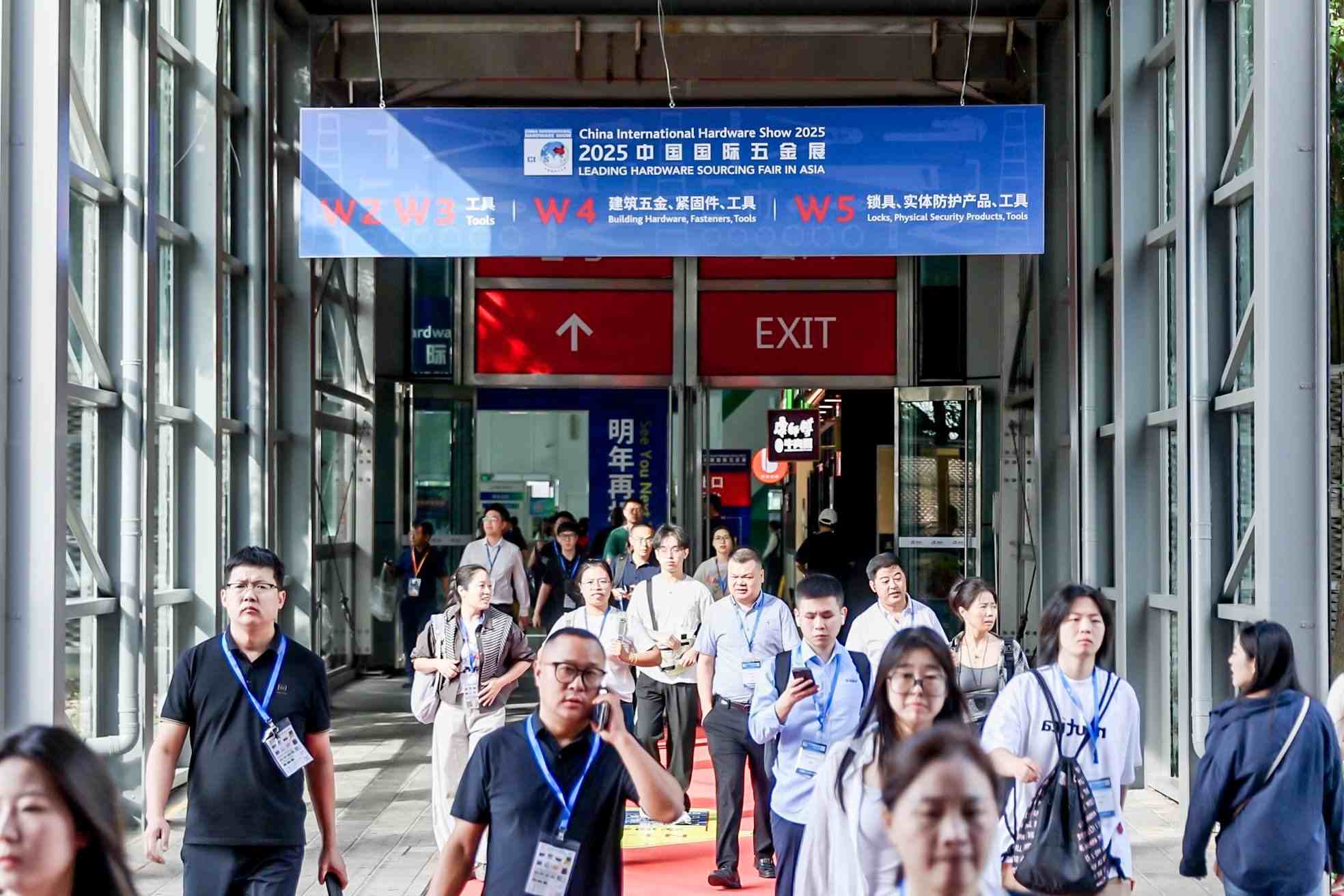
At China International Hardware Show, the new destination mix is visible in one venue. More than 3,000 exhibitors covered the full hardware spectrum in the 2025 edition: hand tools, power tools, pneumatic tools, abrasives, welding supplies, building hardware, fasteners, garden and outdoor tools, safety protection, and intelligent locking systems. We welcomed 77,016 professional visitors from 123 countries and regions across 120,000 square meters.
That scale means you can compare destination-ready suppliers and certification approaches in the same day rather than over months of email. Because many buyers now arrive with a regional shortlist, the most productive conversations are about documentation, packaging, and lead times rather than brochure-level claims.
Plan your next sourcing move around the new export map
China's hardware export story is no longer about one destination. It is a wider, more fragmented but still expanding opportunity set. The practical next step is to build a supplier shortlist around the destination requirements that will affect your landed cost and your customers’ trust.
If you need help matching exhibitor categories to your target markets, contact our buyer services team at trista.ming@koelnmesse.cn or +86 21 6390 6161-832.
FAQ
Is China still competitive for hardware exports beyond the US and EU?
Yes, but the basis of competition has moved. The stronger suppliers now compete on specification discipline, consistent batch quality, destination documentation, and production capacity rather than on price alone. Buyers should evaluate suppliers differently in this environment.
Which hardware categories are best suited to emerging export markets?
Building hardware and fasteners tied to construction and infrastructure are strong. Power tools that match local electric standards and certification systems travel well. Hand tools and garden tools also suit renovation and agricultural demand. Safety and PPE lines are growing, but compliance requirements are strict.
Do CE, UL, or GS certificates automatically help in new markets?
They help as signals of a supplier’s testing maturity, but they do not replace country marks. Gulf buyers often need SASO/G-mark documentation, while Africa and Southeast Asia use systems such as SONCAP, SNI, and SIRIM depending on the product and importer status.
How can I verify a supplier’s experience in non-traditional destinations before ordering?
Ask for shipment history to the target region, a certificate matrix, packaging references, and any importer references in that market. When possible, meet the supplier on-site and walk through actual product variants rather than reviewing only photos.
References
[1] World Trade Organization, “World Trade Statistical Review,” WTO, 2025.
[2] International Trade Centre, “Trade Map: China exports of hardware, tools, and fasteners,” ITC, 2025.
[3] UN Comtrade, “China export data by destination and product code,” United Nations, 2024.
[4] General Administration of Customs of the People’s Republic of China, “Foreign trade statistics for mechanical and electrical products,” 2025.
[5] European Parliament and Council, “Regulation (EU) 2023/1230 on machinery,” Official Journal of the European Union, 2023.
[6] World Bank, “Global Economic Prospects,” World Bank Group, 2025.
Contact us
-

Ms. Trista Ming
Tel.: +86 21 6390 6161 ext. 832
Trista.ming@koelnmesse.cnMr. Edward Gao
Tel: +86 10 6590 7766-765
Fax: +86 10 6590 6139
Edward.Gao@koelnmesse.cn