


2027 Hardware Procurement: Six Trends Buyers Should Watch
Here is the short answer: the 2027 buying year will reward importers who consolidate suppliers, verify battery and smart-product compliance earlier, and plan around regional inventory rather than chasing the lowest unit price. The most recent published China International Hardware Show data shows 3,016 exhibitors and 23,731 professional visitors from 123 countries and regions; the next edition expands to 120,000 sqm with more than 3,000 exhibitors across the full hardware chain [1]. That means the sourcing question is less about access and more about preparation.

China remains the volume hub, but buyers qualify suppliers earlier
China is still the practical volume base for hand tools, power tools, fasteners, architectural hardware, abrasives, garden tools, and increasingly intelligent locking systems. What has changed is the sequence: more buyers now qualify suppliers before sampling, not after a paid tooling run.
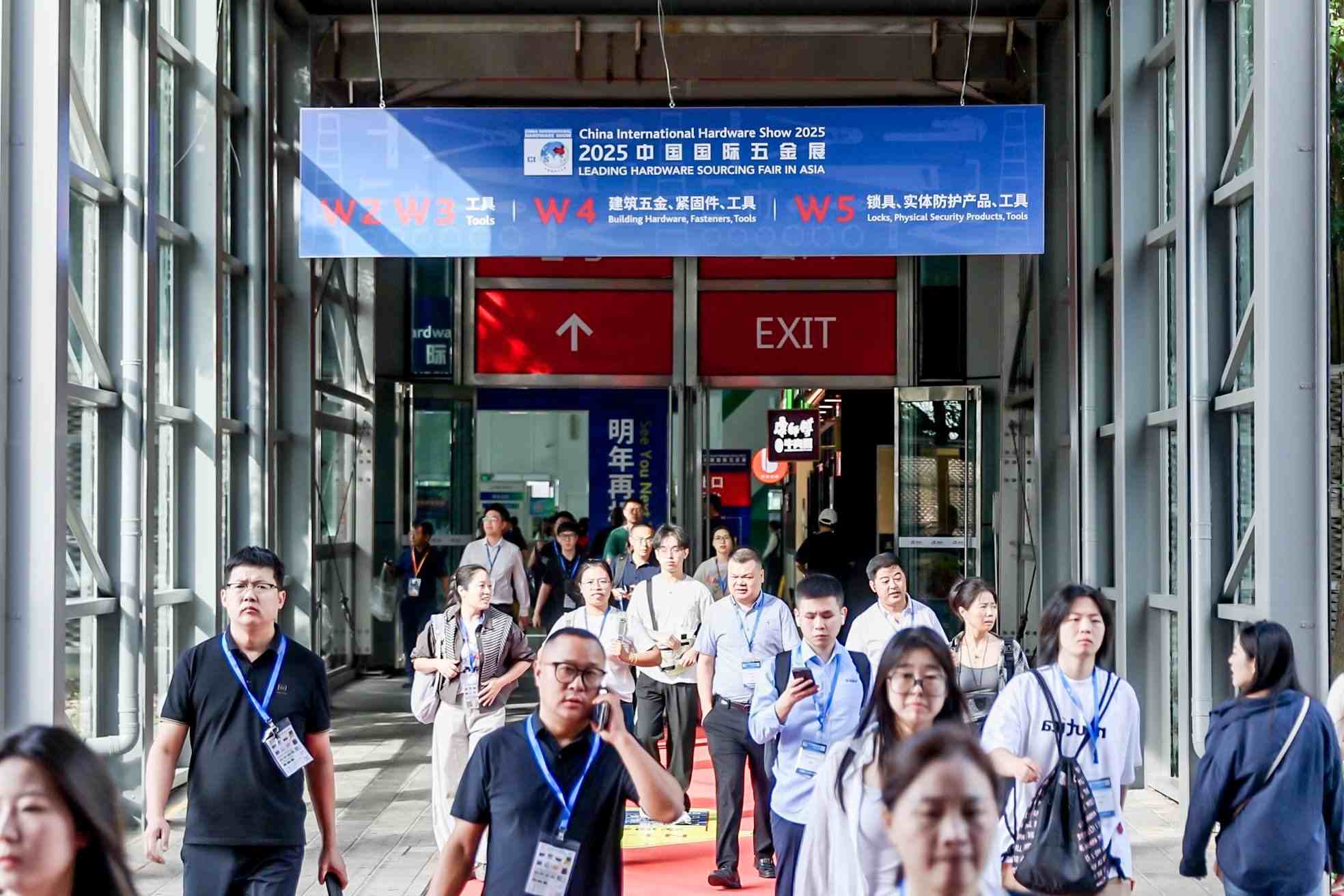
That shift shows up in the questions buyers bring to the fair floor. Instead of asking only for the price per piece, they ask for the factory’s export license, quality-control plan, material sourcing record, certification history, and the name of the person who will own the account after the order. Buyer teams are also comparing factories rather than selecting the first booth that offers a lower unit price.
The practical rule for 2027 is to treat the trade fair as the start of verification, not the end. A booth meeting can confirm capability and chemistry, but it should still be followed by a short audit or video factory walk for serious volume.
Cordless tools and battery platforms now drive tool decisions
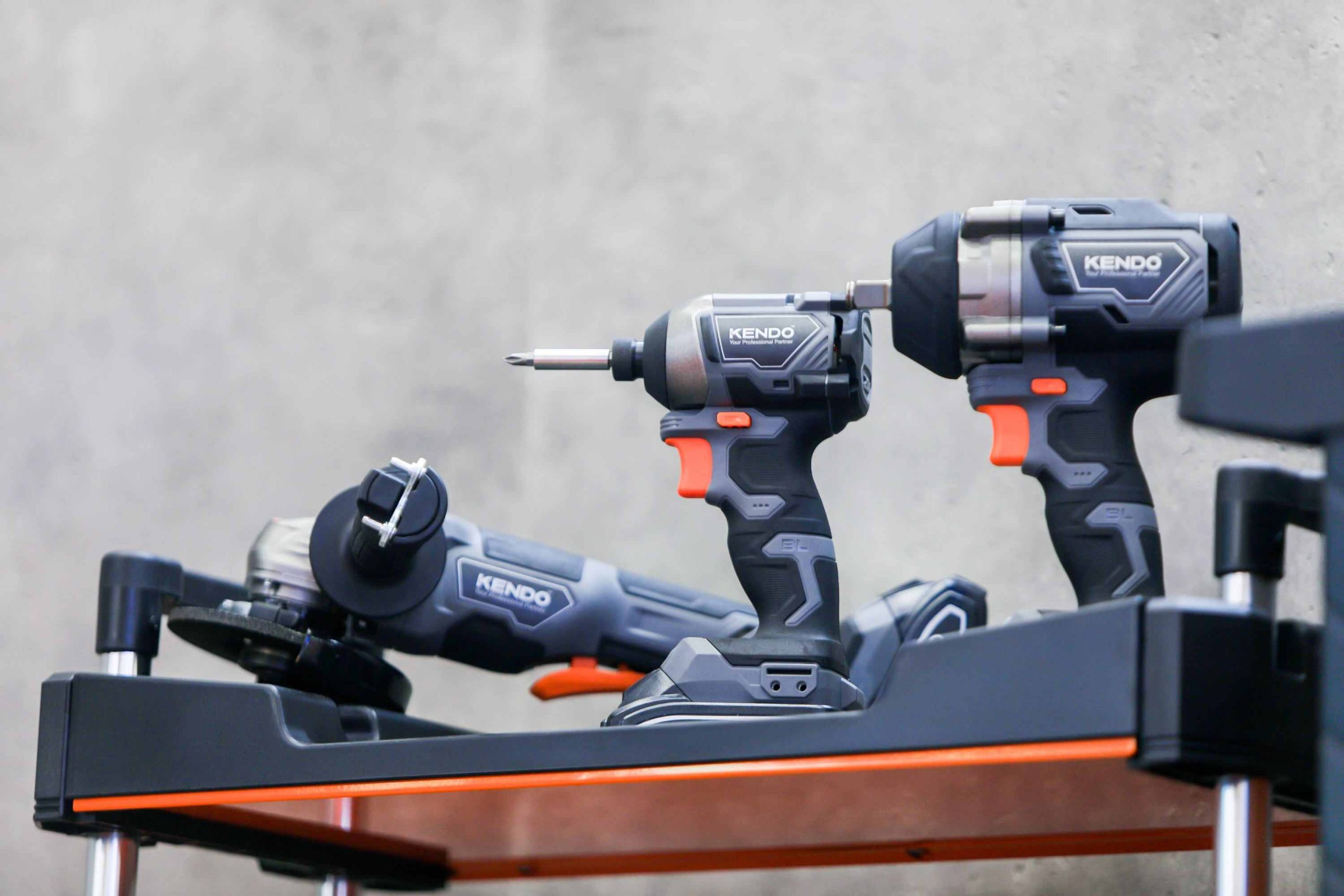
Cordless tools are no longer a niche segment. Brushless motors, interchangeable battery platforms, and higher-capacity lithium-ion packs are shaping professional and DIY demand, and buyers are increasingly choosing tool programmes around battery ecosystems rather than single tool prices.
For procurement, that changes the priority list. Before sampling, buyers should ask for the cell manufacturer, battery management system protection, cycle life, charging temperature range, and warranty terms. Cordless tool shipments also trigger stricter transport requirements, so the battery test summary and packaging method need to be confirmed before quoting freight. The new EU Battery Regulation adds more granular labelling, removability, and supply-chain due-diligence duties for relevant battery types [2].
If a supplier cannot produce a clear battery test summary or platform compatibility map, that is a practical red flag — regardless of the motor’s advertised performance.
Smart locks and connected hardware raise the compliance bar
Smart locks are moving from novelty to mainstream in many export markets, but the buying decision now includes a compliance checklist as much as a product feature list. Fingerprint recognition, Bluetooth, Wi-Fi, and Matter compatibility all introduce regional wireless, data protection, and interoperability requirements.
Buyers should not evaluate a smart lock on a demo video alone. Ask how the device handles firmware updates, where user data is stored, whether the app can be localised, and which certification reports cover the wireless module. A supplier with strong mechanical lock experience may still be early on connected-hardware compliance, so the two capabilities need to be verified separately.
At the fair, live bench testing is more useful than a polished presentation. Check the lock response time, the fingerprint module in less-than-perfect conditions, and the ease of physically resetting the device.
ESG and new regulations are rewriting product specifications
Regulatory pressure is now a permanent part of hardware procurement. Buyers serving Europe need to collect more than a CE marking on a product photo. The relevant compliance file increasingly includes documentation aligned with Registration, Evaluation, Authorisation and Restriction of Chemicals (REACH) [3], the PPE Regulation (EU) 2016/425 for safety products [4], and the Restriction of Hazardous Substances (RoHS) Directive [5].
The buyer trend is not simply to request a certificate. It is to build a repeatable compliance folder: material declarations, SVHC confirmations, test reports, factory audit summaries, and the responsible contact at the factory who can refresh those documents each year. For private-label and own-brand programmes, that file becomes the difference between a smooth customs process and a detained shipment.

If this is the year you move from spot buying to a documented supplier shortlist, the CIHS Buyer Services Team can help match your categories to pre-qualified exhibitors before you arrive. Contact trista.ming@koelnmesse.cn or +86 21 6390 6161-832.
Logistics resilience and regional inventory win in 2027
After several years of freight-rate swings and port disruption, buyers are planning less around a single perfect shipment and more around stability. Long lead times, Chinese New Year shutdowns, container availability, and domestic trucking to the port all still need to be priced into the sourcing calendar.
High-repeat categories such as abrasives, fasteners, and consumable tooling are increasingly being bought with buffer stock and consolidation in mind. Mixed containers, LCL programmes, and regional warehousing allow smaller buyers to test suppliers without committing to a full container from one factory.
The most useful supplier conversations now include an explicit lead-time range, production slot confirmation, and a clear handoff between the factory and the freight forwarder. If the seller cannot explain the shipment route and document handover, treat that as a supply-chain risk as much as a commercial issue.
The 2027 sourcing plan should begin in Shanghai
The most efficient way to act on these trends is to use one physical sourcing event to do the work that would otherwise take months of video calls and scattered samples. A 120,000 sqm floor with more than 3,000 exhibitors lets a buyer compare hand tools, power tools, fasteners, building hardware, garden tools, safety products, and smart locks in the same week [1].
Before travelling, build a SKU-level demand forecast by quarter. Then shortlist three to five potential suppliers per category, prepare the compliance questions for each target market, and book the fair as the central point for factory visits and negotiation follow-up.
The next step is not to collect every catalogue. It is to register, build a shortlist, and arrive with a clear comparison scorecard for the 2027 buying season. For registration and buyer support, contact the CIHS Buyer Services Team at trista.ming@koelnmesse.cn or +86 21 6390 6161-832.
Frequently Asked Questions: Hardware Procurement in 2027
Is 2027 too early to start planning for CIHS sourcing?
No. The buyers who get the strongest results typically begin category planning months in advance. Early planning allows you to confirm compliance requirements, request samples, and book factory visits around the fair instead of leaving everything to the final two weeks.
Which product categories should buyers prioritise for the 2027 season?
Cordless power tools, smart locks, safety protection equipment, high-repeat consumables such as abrasives and fasteners, and outdoor power equipment are strong focus areas. Your market’s seasonal demand should determine the final priority order.
How do buyers verify certifications at the fair?
Ask for the certificate number and issuing body, then check the document against the product marking and the actual manufacturing site. For safety and wireless products, request the relevant test reports. A booth meeting is a starting point; serious orders still require follow-up verification and, for high-volume programmes, a factory audit.
What should buyers do about freight and logistics volatility?
Plan with a lead-time buffer, confirm production slots before finalising the order, and compare sea, air, and consolidation options for small initial shipments. For repeat consumable categories, consider regional buffer stock so a delayed container does not immediately stop your sales.
References
[1] China International Hardware Show, “CIHS Facts and Figures,” Koelnmesse (Beijing) Co., Ltd. and China National Hardware Association, 2025.
[2] European Commission, “Regulation (EU) 2023/1542 concerning batteries and waste batteries,” Official Journal of the European Union, 2023.
[3] European Commission, “Regulation (EC) No 1907/2006 concerning the Registration, Evaluation, Authorisation and Restriction of Chemicals (REACH),” Official Journal of the European Union, 2006.
[4] European Commission, “Regulation (EU) 2016/425 on personal protective equipment,” Official Journal of the European Union, 2016.
[5] European Commission, “Directive 2011/65/EU on the restriction of the use of certain hazardous substances in electrical and electronic equipment (RoHS),” Official Journal of the European Union, 2011.
Contact us
-

Ms. Trista Ming
Tel.: +86 21 6390 6161 ext. 832
Trista.ming@koelnmesse.cnMr. Edward Gao
Tel: +86 10 6590 7766-765
Fax: +86 10 6590 6139
Edward.Gao@koelnmesse.cn