


Cordless Power Tools: Battery Technology and Sourcing Priorities
Cordless power tools are no longer a DIY compromise. Battery technology now determines runtime, weight, platform cost, supplier switching risk, and the documentation a buyer needs before shipment. The practical question is not whether a cordless tool can replace a corded one. It is whether the battery system behind the tool is costed, supported, and certified for your market. At the next China International Hardware Show, that distinction will be visible across every power tool hall.
Why Battery Packs Now Drive the Cordless Tool Purchase
The power tool shell is only the visible part of the sourcing decision. The battery pack, charger, cell supply, and battery management system decide whether the tool can be serviced, whether replacement packs remain available, and whether the packed unit moves through customs without delay. A supplier with an attractive drill but a thin battery platform may look inexpensive in the booth and become expensive after two years of replacement packs and mixed battery inventories.
Most professional cordless tools now use lithium-ion cells in common cylindrical formats such as 18650 or 21700, although pouch and larger formats appear in selected categories. The cells themselves are not the whole story. A modern pack also includes protection circuits, charge-state monitoring, and thermal controls. That system, not just the cell count, determines how long a tool runs and how safely a pack ages.

What Voltage and Amp-Hour Ratings Actually Tell You
Voltage, amp-hours, and watt-hours answer different questions. Voltage indicates the power class and platform family. Amp-hours indicate capacity at a given pack voltage. Watt-hours combine the two into a better cross-platform energy comparison. Buyers who compare only the voltage printed on the box can walk through the fair with a false sense of equivalence.
| Rating | What it actually tells you | Common sourcing mistake |
|---|---|---|
| Voltage (V) | The power class and platform family, not a quality score | Treating a 20 V Max label as stronger than an 18 V nominal system |
| Amp-hour (Ah) | Runtime capacity at the same pack voltage | Comparing Ah across battery systems with different voltages |
| Watt-hour (Wh) | Total stored energy, the fairest runtime comparison | Ignoring Wh and relying only on printed Ah or voltage |
| Cell format and cell source | Discharge capability, pack size, and supply stability | Assuming every pack with the same voltage uses comparable cells |
| Battery management system | Protection, charge control, and tool communication | Overlooking the BMS because it is hidden inside the pack |
| Charge time and cycle life | Operating cost and replacement planning | Accepting a single charge-time claim without asking about test conditions |
Ask for the Wh rating and the test conditions behind cycle life. The same pack may deliver different cycle life at high and low temperatures, and a supplier should be able to state which conditions apply to the published figure.
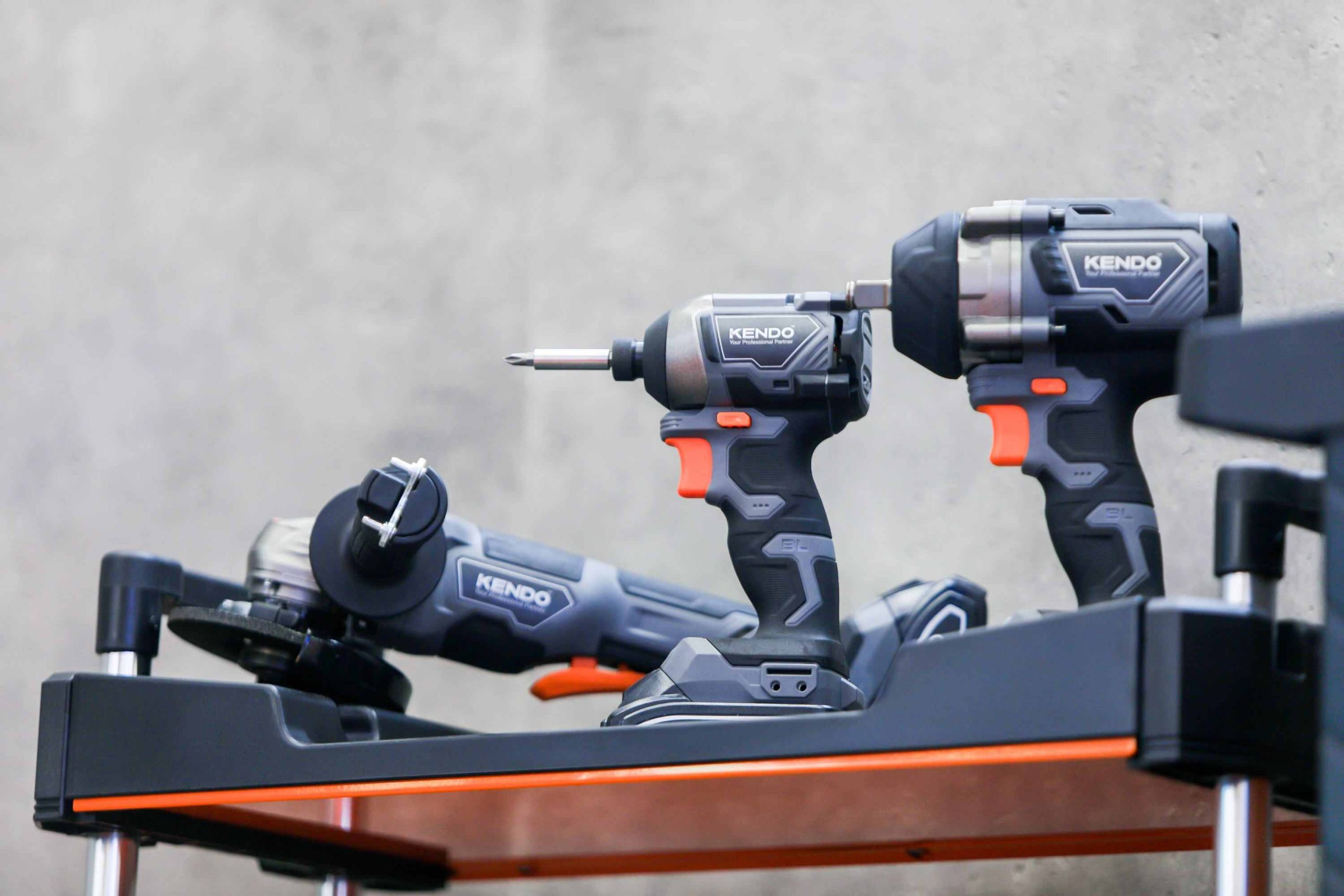
Battery Platforms Make Supplier Switching Expensive
Voltage is not a universal compatibility promise. A charger, battery, and tool from different suppliers usually speak different communication protocols, use different connectors, and arrange cells differently. Once you commit to a battery platform, replacement batteries, chargers, and future tools tend to follow that platform. That can be efficient when the platform is well supported, and costly when the supplier weakens its product line or changes its cell sourcing.
Before choosing a new cordless tool range, ask whether the platform has backward compatibility with existing batteries, whether the supplier offers second-source replacement packs, and how long the battery series is expected to remain available. A low tool price does not offset a platform that limits your future options.

Brushless Motors and Battery Electronics Change Quality Control
Brushless motors replace mechanical brushes with electronic commutation. That can improve runtime and reduce maintenance, but it moves more of the tool’s reliability into the controller and battery management system. A brushless tool can deliver more run time from the same pack because the controller reduces losses, yet the controller is also a failure point if the supplier under-specs heat dissipation or protection.
When evaluating brushless tools at a trade fair, look beyond the motor label. Ask for the protection features built into the controller, the type of cell balancing in the pack, and the thermal environment in which the tool is rated to operate. A cutaway sample or a test unit often reveals more than a printed specification sheet.
Battery Regulations and Shipping Are Procurement Issues
Lithium-ion packs carry transport and market-access obligations that corded tools did not. Buyers should request the current test summary, the relevant CE or UKCA documentation, and confirmation that the pack is classified and packaged for the required transport method. If the pack is subject to the EU Battery Regulation, ask which reporting stage the supplier currently meets and whether the required documentation will remain available for your order timetable.
This is a practical sourcing step, not a legal audit. You do not need to become a battery certification expert, but you need to know that the supplier has a documented route to your market. Weak documentation can delay a container at the border long after the product samples have been approved.
How to Evaluate Cordless Tool Suppliers at the Fair
Use a battery-first sequence when you walk the cordless tool sections.
Start with the battery platform, not the tool shell. Confirm the voltage family, Wh rating, cell source, and replacement pack availability.
Request pack documentation. Ask for transport test summaries, market-access documentation, and the test conditions behind cycle life claims.
Test the BMS and controller protection. Use cutaway samples, test units, or direct questions about over-temperature, over-discharge, and short-circuit protection.
Compare total cost of ownership. Include replacement batteries, chargers, freight classification, certification updates, and likely service support.
Lock second-source options. Check whether another supplier can support the battery platform or whether you are buying into a single-source risk.

Plan Your Cordless Tool Sourcing Shortlist
Start with the battery specifications that affect your total landed cost, then narrow your booth list before the next China International Hardware Show. When you need help matching cordless tool suppliers to your market certifications or platform strategy, contact the buyer services team at trista.ming@koelnmesse.cn or +86 21 6390 6161-832.
FAQ
Does higher voltage always mean a stronger cordless tool?
No. A 20 V Max label can describe the same nominal battery family as an 18 V system. Compare watt-hours, motor type, and the battery management system instead of treating voltage as a strength score.
Are brushless tools always better than brushed tools?
Brushless tools often deliver better runtime and less maintenance, but the controller becomes an important quality variable. A poorly protected brushless controller can fail earlier than a simple brushed motor, so ask about thermal protection and warranty conditions.
Why can’t I use one charger for all my cordless tools?
Battery platforms use different connectors, cell arrangements, communication protocols, and charge profiles. Even cells with the same visible voltage can require different balancing and current control, so charger compatibility is not a simple matter of matching the printed number.
What battery documentation should I request before ordering?
Request the transport test summary, relevant CE or UKCA documentation, and any EU Battery Regulation reporting that applies to your market. Also ask for the test conditions behind cycle life and the replacement pack availability for the platform.
Contact us
-

Ms. Trista Ming
Tel.: +86 21 6390 6161 ext. 832
Trista.ming@koelnmesse.cnMr. Edward Gao
Tel: +86 10 6590 7766-765
Fax: +86 10 6590 6139
Edward.Gao@koelnmesse.cn