


Power Tool Battery Platforms: Compatibility and Competition
Power tool battery platforms determine which batteries, chargers, bare tools and accessories can work together as one fleet. They are not just a voltage rating. For professional buyers and importers, the platform choice shapes replacement battery demand, service complexity, product line depth and long-term supply stability. We treat compatibility as a sourcing decision to be made before tool selection, because the battery platform usually outlasts the first tool purchase and creates the strongest aftermarket lock-in.
Why Battery Platform Decisions Start Before the Tool
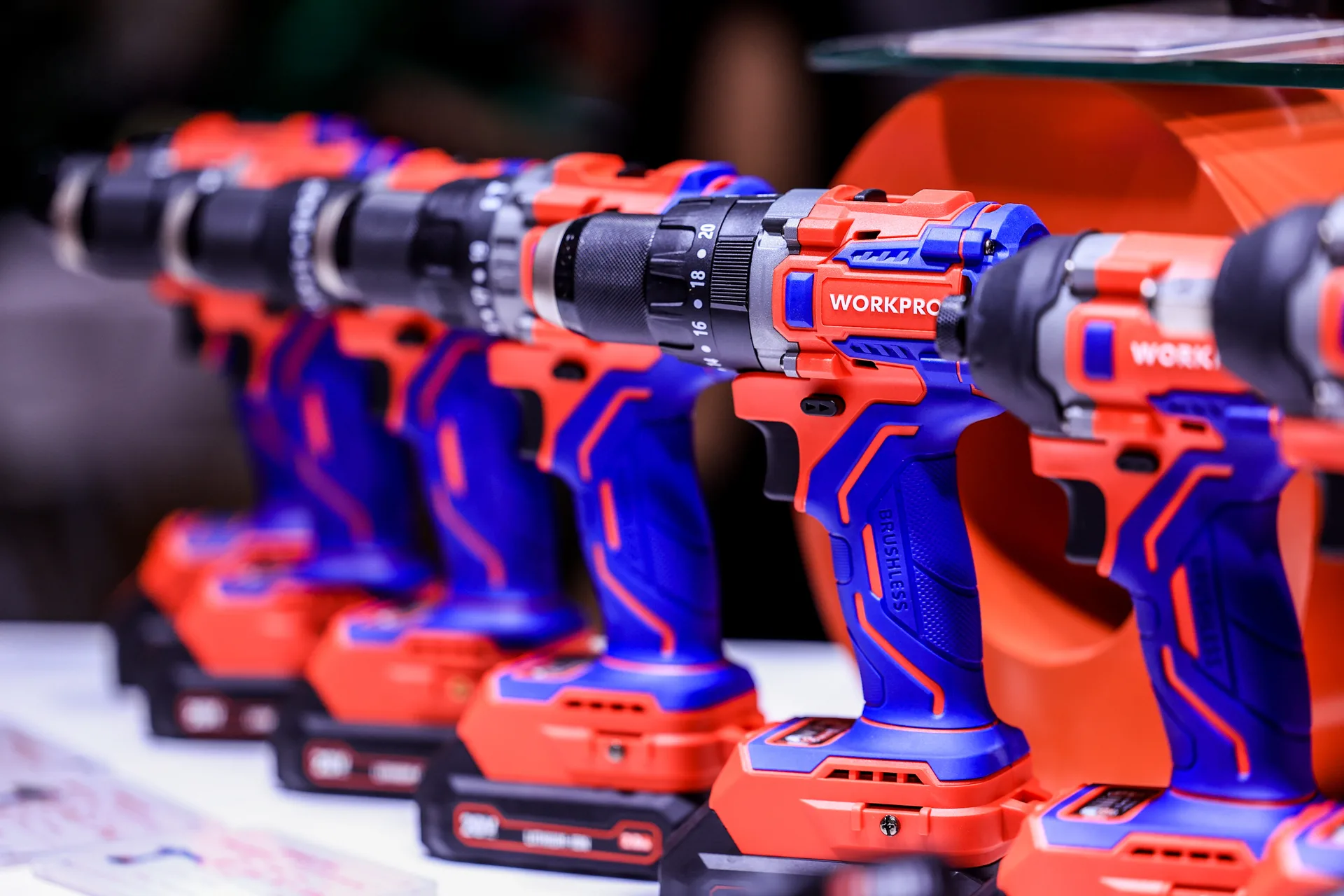
A cordless tool purchase commits the buyer to a battery system. The visible cost is the tool and one battery. The longer-term cost includes additional batteries, chargers, spare parts, warranty replacements and the ability to add new tool categories without buying another platform. If a buyer works across drilling, fastening, cutting and outdoor equipment, consolidating on one or two platforms reduces chargers, storage and training.
That is why platform evaluation should begin with the application and market, not with a single promotional tool price. A platform that works well for a compact 12V installation tool may not be the right base for high-drain garden equipment or heavy metalworking tools. Professional fleets often run two voltage classes: a compact 12V line for overhead and finish work, and an 18V or 20V-class line for general construction and industrial tasks. Higher-voltage systems may sit behind the highest-torque tools. The decision is not simply high voltage equals professional.
Compatibility Layers Buyers Often Overlook
Compatibility has several layers. Buyers frequently check only the mechanical connection: does the battery slide into the tool? The deeper layers determine whether the system is safe, stable and economical over time.
Mechanical fit is only the first screen
The battery pack, stem and latching mechanism must fit the tool. This is the easiest check at a trade show, but it does not prove electrical compatibility. A pack can fit mechanically and still be rejected by the tool’s electronics. Buyers should also confirm that every claimed tool model, including older and newer versions, accepts the same battery series without modification or an adapter.
Electronic handshakes and firmware
Modern battery packs contain a battery management system that communicates with the tool and charger. The system monitors temperature, voltage, current and state of charge, and it can limit output when parameters move outside safe bounds. This electronic handshake is often proprietary to a brand’s platform. It is part of the safety design, but it also means cross-brand operation cannot be assumed from voltage and physical shape alone. When sourcing an original design manufacturer product, ask whether the tool, battery, charger and firmware were tested as a system.
Aftermarket adapters require extra caution
Cross-platform adapters are available in some markets, but they create risks that a buyer should not ignore. An adapter may bypass the original communication path or expose cells to current and temperature conditions they were not designed to handle. This can shorten battery life, increase warranty disputes or create safety risks. Some brands state that adapter use voids the battery and tool warranty. For a commercial importer, the safer position is to source batteries and chargers within the same tested platform and to document that requirement in supplier agreements.

Battery Innovation That Changes Sourcing Requirements
Lithium-ion cells and brushless motor technology changed what buyers should ask about. The cells themselves are not interchangeable commodity inputs from the buyer’s perspective. Cylindrical cell types such as 18650 and 21700 formats appear across many products, but cell supplier, chemistry, matching and pack assembly determine cycle life, runtime and thermal behavior. A battery pack with the same voltage rating can perform very differently under continuous high-current loads.
Battery packs are now a safety and compliance category, not merely an accessory. Buyers should expect evidence of UN 38.3 transport testing for lithium-ion cells and packs [1] and safety testing to a recognized standard such as IEC 62133-2 [2]. The European Union’s battery rules have also tightened traceability, carbon footprint and end-of-life requirements, so export packaging and documentation are part of the platform decision [3]. This is not a one-time certificate check. The supplier should show how they maintain cell traceability and update documentation when cell sources or pack designs change.
Fast charging, active cooling and tool-to-battery communication are becoming buying criteria for professional platforms. Faster charge claims should be checked against cycle life and thermal performance, not just a marketing time. A high-current charge can create more heat and accelerate degradation unless the pack and charger are designed together. Ask the supplier for the full charging strategy, not just the best-case charge time.
Market Competition and Platform Lock-In
Platform competition is not only about product performance. It is a battle for installed bases. Once a distributor or contractor owns several batteries and chargers on one platform, switching to another brand becomes more expensive. This gives the platform owner strong replacement-battery revenue and makes the installed base a barrier to entry for new tool brands. For a buyer, this creates both an advantage and a negotiation point.
The advantage is that a mature platform usually has a deep tool range, predictable spare parts and established service demand. The risk is lock-in: if replacement batteries are scarce or expensive in the target market, the buyer has already created the dependency. That is why procurement should compare the total cost of tool plus batteries plus replacement packs and chargers, not tool price alone.
Buyers should also separate professional and DIY platform strategies. Professional systems prioritize runtime continuity, fast charging, durable pack construction and serviceable electronics. DIY or value platforms may prioritize price and occasional use. A lower-priced pack may not survive the duty cycle of a professional fleet, and the resulting warranty cost moves back to the importer.
How to Compare Battery Platforms at CIHS 2026
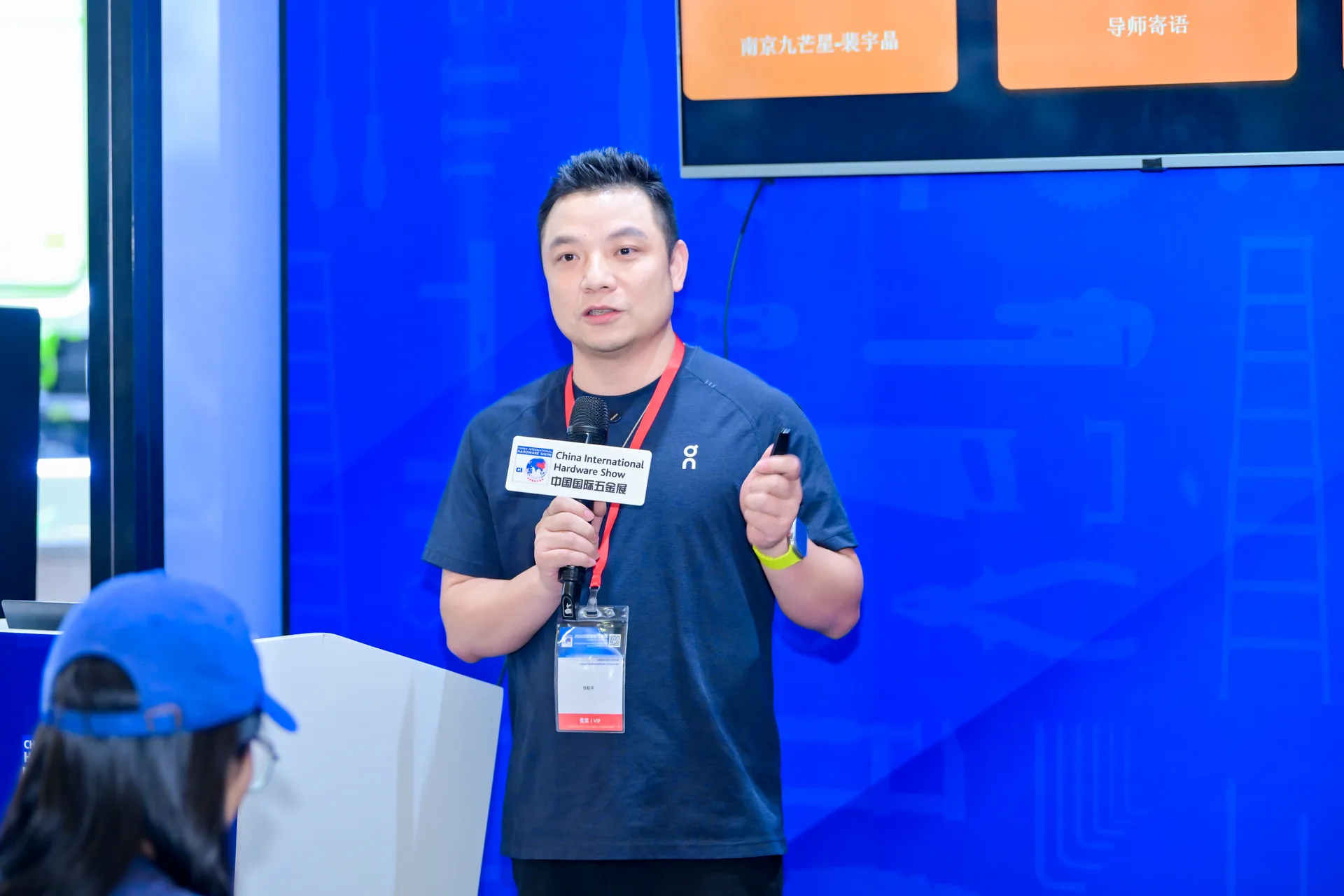
At CIHS 2026, more than 3,000 domestic and international exhibitors spread across 120,000 sqm of exhibition space, and the power tool halls bring together cordless platform suppliers from Qidong, Zhejiang and Guangdong. Use the floor time to test claims that cannot be checked from a catalogue.
Start with a short bench test: run a representative tool under load, feel the balance, check the latch, and ask for the charge time at a realistic ambient temperature. Then move to supply chain questions. Ask which cell suppliers the factory uses, whether the platform is the factory’s own design or licensed, and how long batteries and chargers will be available after the tool model changes. Document the answers at the stand, because these commitments matter more than the sample price.

Procurement Checks for Battery-Powered Tool Orders
Use the same platform questions in every request for quotation. The table below converts a battery platform decision into a sourcing checklist:
| Check | What to request | Why it matters |
|---|---|---|
| Mechanical compatibility | Confirm every battery model fits every claimed tool model without an adapter | A fit at the sample stage does not guarantee compatibility across the whole range |
| Electrical and firmware testing | Ask for tool, battery and charger validation as one system | Proprietary communication can block operation even when voltage and shape match |
| Cell traceability | Request cell supplier, cell model and lot-level batch records | Cell changes can alter cycle life, safety and export documentation |
| Certification | Obtain UN 38.3 and IEC 62133-2 evidence for the exact packs | Transport and retail access depend on the specific pack, not the brand brochure |
| Aftermarket availability | Confirm replacement battery and charger availability over three to five years | Platform economics depend on repeat supply, not the first container |
| End-of-life compliance | Check EU or destination-market battery documentation and battery take-back terms | Battery waste rules are becoming part of the landed cost and sales contract |
These checks are not intended to turn every buyer into a battery engineer. They are designed to expose the difference between a tested platform supplier and a company that assembles sample packs without a documented system. If a supplier cannot answer the traceability and service questions, price should not close the gap.
Plan Your Battery Platform Review at CIHS 2026
The next step is to bring your target tool categories, voltage preference and destination market requirements to CIHS 2026. We can help you shortlist manufacturers that build battery platforms rather than only assembling tools around purchased packs. Contact the CIHS Buyer Services Team at trista.ming@koelnmesse.cn or +86 21 6390 6161-832 to build your platform comparison plan before the show.
FAQ
Which battery platform should international buyers prioritize?
Start with the end user and the duty cycle, not a single voltage figure. For most professional and mixed fleets, a mature 18V or 20V-class platform offers the widest tool range and the easiest aftermarket support. Add a compact 12V platform where overhead work or detailed assembly is important. Move to a higher-voltage platform only when the product range includes sustained high-torque or outdoor equipment, and confirm that the voltage gain comes with tested packs and chargers rather than a simple label change.
Are cross-brand battery adapters safe to source?
They reduce upfront switching cost, but they create safety and warranty risk. Adapters can bypass the original battery management communication and expose cells to conditions the pack was not designed for. For commercial orders, avoid making adapters the center of a sourcing strategy. If a customer asks for one, verify that the supplier has tested that exact tool, battery and adapter combination, and state clearly that warranty terms may be affected.
What certifications do cordless power tool batteries need for export?
The core requirements depend on destination. Lithium-ion cells and packs generally require UN 38.3 transport test evidence [1]. Markets also commonly ask for safety testing such as IEC 62133-2 [2]. The European Union applies additional battery traceability, carbon footprint and end-of-life rules under Regulation (EU) 2023/1542 [3]. Ask the supplier for reports covering the exact battery model and current cell source, not a generic folder of factory certificates.
How should buyers compare 18V and 36V or 40V platforms?
Compare the work being done, not just the voltage. An 18V or 20V-class system covers most drilling, fastening, grinding and cutting tasks while keeping batteries light. Higher-voltage platforms help in sustained high-load applications such as larger outdoor equipment, but the pack and tool may become heavier and more expensive. Evaluate the full system: runtime under load, charge time, pack weight, replacement battery price and tool range depth.
What should buyers confirm before placing a battery platform order?
Confirm compatibility across the entire promised tool range without adapters, the cell supplier and batch traceability, tested certifications for the exact pack, replacement battery and charger availability, and warranty support in the destination market. Also agree on how firmware or platform changes will be communicated before production. These points belong in the purchase contract, not only in the sales conversation.
References
[1] United Nations, “Manual of Tests and Criteria, Part III, sub-section 38.3: Lithium metal and lithium ion batteries,” UNECE, current edition.
[2] IEC 62133-2:2017, “Secondary cells and batteries containing alkaline or other non-acid electrolytes – Safety requirements for portable sealed secondary lithium cells, and for batteries made from them, for use in portable applications – Part 2: Lithium systems,” IEC, 2017.
[3] European Parliament and Council, “Regulation (EU) 2023/1542 concerning batteries and waste batteries, amending Directive 2008/98/EC and Regulation (EU) 2019/1020 and repealing Directive 2006/66/EC,” Official Journal of the European Union, 2023.
Contact us
-

Ms. Trista Ming
Tel.: +86 21 6390 6161 ext. 832
Trista.ming@koelnmesse.cnMr. Edward Gao
Tel: +86 10 6590 7766-765
Fax: +86 10 6590 6139
Edward.Gao@koelnmesse.cn