


Global Fasteners Market 2027: What Buyers Should Plan For
The global fasteners market in 2027 will be decided less by a headline growth rate than by four things you can actually count: construction and infrastructure work already under contract, vehicle and machinery build volumes, wind and grid build-out, and the qualification time a new supplier needs before it can ship against your drawing. Buyers who plan around those four commit volume with reasonable confidence. Buyers who plan around a market-size figure tend to discover in the second quarter that their approved supplier list has not changed and their landed cost has. This article maps what is shifting, and what to check before you commit 2027 volume.
What actually drives global fastener demand in 2027
Fasteners are derivative demand. Nobody buys a bolt because they want a bolt. They buy it because a joint has to be made, and the number of joints is set upstream by how many vehicles, appliances, structures, and turbines are being built. That single fact explains most of what looks like volatility in the global fasteners market.
Three mechanics are worth keeping in view.
Fastener volume follows unit counts, not economic sentiment. A GDP revision moves very little steel. A plant shutdown, a platform changeover, or a delayed steel erection sequence moves a great deal.
Fastener content per unit is changing. A battery-electric vehicle carries fewer powertrain fasteners than a combustion model but more structural, battery-enclosure, and thermal-management fasteners, many at higher property classes and with tighter coating requirements. A wind turbine carries a small number of very large, very highly specified fasteners per megawatt, and the qualification burden on those parts is far heavier than the tonnage suggests.
Demand is lumpy, and inventory amplifies it. Infrastructure money rarely reaches bolt orders in the quarter it is announced. It reaches them when steel fabrication starts, which can be a year or more later. In the other direction, when distributors decide to destock, factory order books fall faster than actual consumption, and the dip gets read as a demand collapse when it is an inventory correction.
There is also a stickiness mechanism that matters for planning. A fastener is a small share of an assembly’s cost and a large share of its failure risk, so buyers rarely switch supplier to save a few percent. They switch when a qualification cycle completes, or when a trade measure moves landed cost enough to justify requalification. For your own 2027 supply, the useful number is not market size. It is approved-supplier coverage per category, measured in weeks of qualified capacity rather than in headcount of suppliers.
Which end markets will move fastener volumes first
Four end markets carry most of the volume, and each releases orders at a different point in its cycle. Reading the wrong signal for the market you buy for is the most common planning error in this category.
Construction and infrastructure is the largest single outlet for structural and building fasteners. Volume is released at steel erection, not at funding announcement, so the useful lead indicator is fabrication bookings and erection schedules rather than appropriation headlines. Specification is regional and grade-driven. Property classes in ISO 898-1 set the mechanical requirements for carbon and alloy steel bolts, screws, and studs [1], North American structural work runs on ASTM F3125/F3125M high-strength bolts [2], and European preloaded structural work runs on EN 14399-3 assemblies [3]. Both structural routes frequently require hot-dip galvanized coating, along with the thread allowance that coating implies.
Automotive is smaller in tonnage and far stricter. Supplier approval runs through an automotive quality management system, typically IATF 16949, plus part-level approval before production. Volume tracks platform build schedules, and a platform changeover can remove a part number from your order book in one model year. Coating, torque-tension performance, and traceability requirements all run higher than in general industrial work.
Industrial machinery and MRO demand is steadier but moves with distributor stocking policy. If your customers are distributors, watch their inventory turns rather than end-user production.
Wind and electrical transmission is the fastest-changing of the four in specification terms. It absorbs large-diameter high-strength fasteners, anchor bolts, and foundation hardware, and qualification cycles run long because the consequences of a joint failure are severe.
| End market | What moves fastener volume | Useful lead indicator | What the indicator does not prove |
|---|---|---|---|
| Construction and infrastructure | Steel erection on contracted work | Fabricator bookings and erection sequence | That announced funding becomes orders in the same year |
| Automotive | Platform build volumes and part-level approval | OEM build schedules and changeover dates | That an approved part stays approved across a platform change |
| Industrial machinery and MRO | Distributor restocking and replacement cycles | Distributor inventory turns | That factory orders equal end-user consumption |
| Wind and electrical transmission | Turbine and substation order books | Interconnection queues and turbine order books | That a large project order converts to fasteners at the same tonnage ratio |
That fourth column is doing real work. It stops a buyer from reading a headline as a purchase order.
Where the fastener supply map is shifting
China remains the largest producing country for fasteners, and its output is clustered rather than spread evenly. Production concentrates in a small number of districts, each with its own product bias, so a supplier’s address often tells you more about its likely strength than its catalogue does.
The shift buyers ask about most is diversification into Vietnam, India, Turkey, and Mexico. Diversification is real, but the mechanism is often misunderstood. A meaningful share of alternate-country capacity is Chinese-owned, financed with Chinese equipment, or dependent on Chinese wire rod. Changing the country of final formation changes origin and duty treatment. It does not automatically remove upstream exposure. The first question about any alternate source should be where the wire rod comes from.
Wire rod is the constraint that matters most to cost. Fastener pricing tracks the rod grade and the coating, not the finished-part catalogue price. Property class 8.8 parts are commonly made from medium-carbon, boron, or carbon-manganese grades, while 10.9 and 12.9 parts typically need alloy steel with tighter chemistry control and disciplined heat treatment. When rod prices move, they move the whole category within a quarter, and a supplier quoting a fixed price for twelve months is either hedging or planning to renegotiate.
The other shift is regionalization of the last step. More European and North American buyers are asking for coating, sorting, kitting, and packaging near the point of use, which moves value out of Asia even when the forming stays there. That changes landed cost structure and lead time more than it changes unit price.
How trade measures change your 2027 landed cost
Three trade mechanisms affect fastener landed cost in 2027, and they operate on different variables. Buyers who fold them into one “China tariff” number usually get their costing wrong.
Anti-dumping duties are company-specific and product-specific. The European Union has maintained anti-dumping measures on certain iron and steel fasteners originating in China since 2009 and extended them in 2022 for a further five years [4]. The duty attaches to the product scope defined in the regulation, and the rate depends on the named exporter, so a new supplier does not inherit the country average. A costing model that applies one rate to every Chinese fastener supplier is wrong for at least one of them.
Carbon border adjustment is the newer variable. The EU carbon border adjustment mechanism moved to its definitive regime from 2026, applying to the iron and steel goods listed in its annex [5]. For a fastener buyer, the practical effect is that embedded carbon becomes a reportable and eventually a costed attribute of the goods. Confirm whether your specific product codes are listed instead of assuming that any steel article is in scope, and ask suppliers for evidenced emissions data early. A number that cannot be evidenced is not usable in a declaration.
Section 301 tariffs in the United States are origin-based and were revised after the four-year review completed in 2024 [6]. They stack with anti-dumping and countervailing duty orders where those apply, and they attach to the origin of the goods rather than the nationality of the supplier’s parent company. That distinction is where most spreadsheet errors happen.
| Measure | What it attaches to | What it changes for a 2027 order | What you cannot infer |
|---|---|---|---|
| EU anti-dumping on iron and steel fasteners | Product scope in the regulation plus named exporter | The duty rate on your specific supplier | That a new exporter carries the same rate as an established one |
| EU carbon border adjustment | Iron and steel goods listed in the annex, phased from 2026 | Reporting burden and eventual carbon cost per shipment | That every fastener product code is listed |
| US Section 301 tariffs | Country of origin of the goods | Duty stack on Chinese-origin product | That a non-Chinese supplier removes exposure when the goods are Chinese-origin |
| Origin rules in any market | Substantial transformation criteria | Whether a re-routed shipment actually changes origin | That assembly in a third country automatically changes origin |
Which standards will buyers be asked to verify
The standard on the drawing decides what a supplier must prove, and buying to the wrong one is an expensive way to save a few percent.
Property class and strength
ISO 898-1 sets mechanical property requirements for carbon and alloy steel bolts, screws, and studs, and classes 8.8, 10.9, and 12.9 are the ones that appear in most industrial purchasing [1]. The class fixes tensile strength, proof load, and hardness ranges. It says nothing about corrosion resistance, joint design, or suitability for a preloaded application. A 12.9 bolt is not automatically better than a 10.9 bolt in every joint. Higher strength combined with the wrong coating and the wrong preload can introduce hydrogen embrittlement risk in high-strength galvanized parts, which is why the coating and the post-coating baking step have to be specified together with the class.
Structural and assembly standards
ASTM F3125/F3125M covers high-strength structural bolts at the 120 ksi and 150 ksi strength levels [2], and it replaced the older A325 and A490 specifications. Drawings that still cite A325 remain common, and the buyer’s job is to confirm which document the supplier actually tests against, not which one appears in the legend.
Preloaded assemblies have their own rule. EN 14399-3 covers System HR assemblies for preloaded structural bolting [3], and the point of an assembly standard is that bolt, nut, and washer are qualified together. Mixing components from different manufacturers inside a preloaded assembly is a frequent and quiet failure, because each part passes its own inspection while the assembly has never been tested as a unit.
Inspection and coating
ISO 3269 defines acceptance inspection for fasteners by attributes [7], which means sampling plans and acceptance numbers, not a promise of zero defects. A supplier reporting “all inspected and passed” without stating the sampling plan and the acceptance number has given you nothing you can audit.
Coating closes the loop. Hot-dip galvanizing adds thickness to the thread and changes the fit, so thread tolerances must be opened before coating rather than after. This is one of the few places where a drawing error shows up in assembly instead of in inspection.
What to track through 2027 and what to ignore
Six indicators carry most of the planning value. Contracted work that has reached fabrication, because fabricator bookings convert to bolt orders while appropriations do not. Platform and model changeover dates from your OEM customers. Turbine and substation order books, read alongside grid interconnection queues. Wire rod prices by grade, because that is the input that resets category pricing. Scope notices on anti-dumping, carbon border adjustment, and Section 301, read at product-code level. And your own qualification pipeline, measured in weeks of approved capacity.
Most of what fills a market commentary can be ignored. Headline market-size forecasts for fasteners are typically rebuilt annually from the same vendor summary and never reconciled to customs data, so they are not a planning input. Single-month export tonnage moves are distorted by seasonality and by the Chinese New Year shutdown, which shifts the January and February series every year. Search interest and conference sentiment tell you what people are talking about, not what they are ordering.
Once a year, before you commit volume, re-check four documents instead of four opinions. Check the current edition of the standard your drawing cites. Check whether your product codes appear in the carbon border adjustment annex. Check the duty rate attached to your named exporter rather than the country average. Check the expiry date on each supplier’s quality system certificate. Standards get revised, annexes get extended, exporter-specific rates change, and certificates lapse quietly. A standard’s publication date is also not the date your supplier’s certificate was issued against it, and a 2027 order placed against a 2019 assumption is the most common expensive mistake in this category.
What to re-check before you commit 2027 volume
Turn the sections above into one request document. Seven fields do most of the work.
| Field | What to request | Decision it changes |
|---|---|---|
| Property class and governing standard | Class plus standard and edition, for example 10.9 to ISO 898-1 | Whether the supplier’s heat treatment and test equipment can meet it |
| Chemistry and heat traceability | Mill certificate for the wire rod plus heat-level traceability | Whether a failed lot can be isolated at all |
| Inspection document | Type 3.1 certificate to EN 10204 [8] | Whether the paperwork is independently verifiable |
| Coating and thread allowance | Coating specification, coating thickness, and pre-coating thread tolerance | Whether the parts assemble without rework |
| Acceptance basis | Sampling plan and acceptance number to ISO 3269 | Whether “passed” means something you can audit |
| Origin and classification | Country of origin, country of formation, and product code | Duty exposure and whether a second source actually diversifies |
| Change control | Notification threshold for process, material, or plant changes | Whether a silent change reaches your production line |
Send that document before you compare prices. Two quotes that look twelve percent apart are usually quoting different acceptance bases, and the cheaper one is often the one that left the coating allowance out.
Next step for your 2027 fastener plan
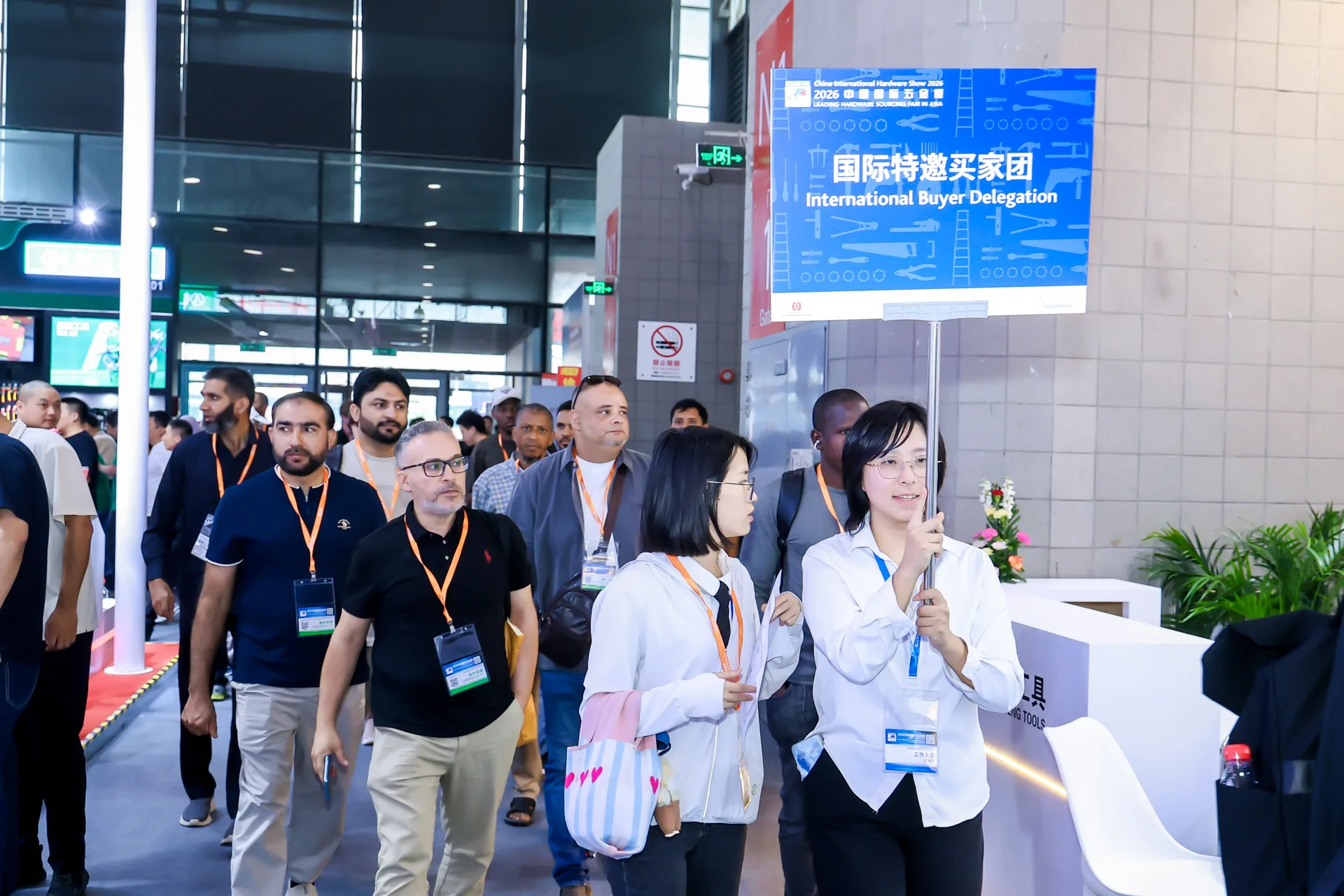
Before you commit volume, put every candidate supplier through the same seven-field document and compare the answers side by side. That is also the fastest way to work a large sourcing show. CIHS covers fastening products alongside hand tools, building hardware, and intelligent locking systems, so a buyer can follow a joint from the bolt to the finished assembly in one venue instead of across a month of email. The buyer team can pre-match your requirements with exhibitors before you travel. Send your property class, governing standard, coating, annual volume, and destination market to trista.ming@koelnmesse.cn or call +86 21 6390 6161-832, and we will return a shortlist with booth numbers. Koelnmesse (Beijing) Co., Ltd. organizes CIHS with the China National Hardware Association.
FAQ
Is the global fasteners market growing in 2027?
We do not publish a growth forecast, and single-number forecasts deserve caution. What can be said with confidence is directional. Fastener volume follows unit build counts in construction, automotive, machinery, and energy, and those four are moving at different speeds in different regions. Construction releases orders at fabrication, automotive at platform changeover, energy at project award. If you need a number for a business case, build it from your own customers’ build schedules and contracted projects, and state the assumption openly, rather than importing a market-size figure that cannot be reconciled to your order book.
Which standard should we specify for structural bolts?
It depends on the destination market and the joint. North American structural work normally calls for ASTM F3125/F3125M. European preloaded structural work normally calls for EN 14399-3 assemblies, where bolt, nut, and washer are qualified as a set. General mechanical properties for bolts, screws, and studs come from ISO 898-1 property classes. Specifying the assembly standard rather than the bolt standard changes what a supplier must hold qualification for, so it also changes your approved-supplier list.
Do EU anti-dumping duties apply to every Chinese fastener?
No. The measures cover a defined product scope, and the duty rate depends on the named exporter rather than on the country as a whole. Two suppliers shipping similar products can face different rates, and a supplier that is new to the market may not hold an individual rate at all. Check the scope in the regulation and confirm the rate attached to your specific exporter before you build duty into a landed-cost model. Origin is a separate question from where the goods were finally formed.
How long does it take to qualify a new fastener supplier?
Longer than most first orders assume, and the sequence matters more than the calendar. Document review comes first: certificates, scope, edition of the standard. Then sample testing against the drawing’s standard. Then a trial order, or part-level approval if you supply automotive. Then production release. Duration is set by the standard and the end market, not by the supplier’s promise, and preloaded structural assemblies and automotive parts both run longer than general industrial fasteners. Plan qualification inside the same horizon as your volume commitment. A supplier approved after you commit is not a second source.
What should a first-time buyer bring to a fastener sourcing meeting?
Bring the seven-field document: property class and governing standard, chemistry and heat traceability requirement, inspection document, coating and thread allowance, acceptance basis, origin and classification, and change-control threshold. Add annual volume and destination market. Photos and physical samples help with identification, but they do not replace a specification, and a supplier cannot quote accurately against a sample alone.
References
[1] ISO 898-1:2013, “Mechanical properties of fasteners made of carbon steel and alloy steel — Part 1: Bolts, screws and studs with specified property classes — Coarse thread and fine pitch thread,” ISO, 2013.
[2] ASTM F3125/F3125M, “Standard Specification for High Strength Structural Bolts and Assemblies, Steel and Alloy Steel, Heat Treated, 120 ksi (830 MPa) and 150 ksi (1040 MPa) Minimum Tensile Strength, Inch and Metric Dimensions,” ASTM International, West Conshohocken, PA, USA.
[3] EN 14399-3:2015, “High-strength structural bolting assemblies for preloading — Part 3: System HR — Hexagon bolt and nut assemblies,” CEN, 2015.
[4] Council Implementing Regulation (EU) 2022/191, “Extending the definitive anti-dumping measures imposed on imports of certain iron or steel fasteners originating in the People’s Republic of China,” Official Journal of the European Union, 2022.
[5] Regulation (EU) 2023/956, “Establishing a carbon border adjustment mechanism,” Official Journal of the European Union, 2023.
[6] Office of the United States Trade Representative, “Four-Year Review of Actions Taken in the Section 301 Investigation,” ustr.gov, 2024.
[7] ISO 3269:2019, “Fasteners — Acceptance inspection,” ISO, 2019.
[8] EN 10204:2004, “Metallic products — Types of inspection documents,” CEN, 2004.
Contact us
-

Ms. Trista Ming
Tel.: +86 21 6390 6161 ext. 832
Trista.ming@koelnmesse.cnMr. Edward Gao
Tel: +86 10 6590 7766-765
Fax: +86 10 6590 6139
Edward.Gao@koelnmesse.cn