


Sourcing Power Tools from China: Quality and Certification
Power tool sourcing usually fails in one of two places. Either the certificate covers less than the buyer assumed, or the sample passed a test the production line will never repeat. Treat those as separate jobs. Quality is what the tool does over thousands of cycles in a customer’s hands. Certification is what one laboratory tested against one edition of one standard. A supplier who can explain the difference is already ahead of most of the field. This guide sets out how we assess power tool quality, check certification documents, and compare suppliers before a purchase order is signed.
What Quality Actually Means in a Power Tool
A power tool data sheet lists voltage, no-load speed, torque, chuck capacity, and battery capacity. None of those numbers predicts how long the tool lasts. Two 20V drills with identical headline figures can sit at very different points on the durability curve, and the gap stays invisible until the second year of field use.
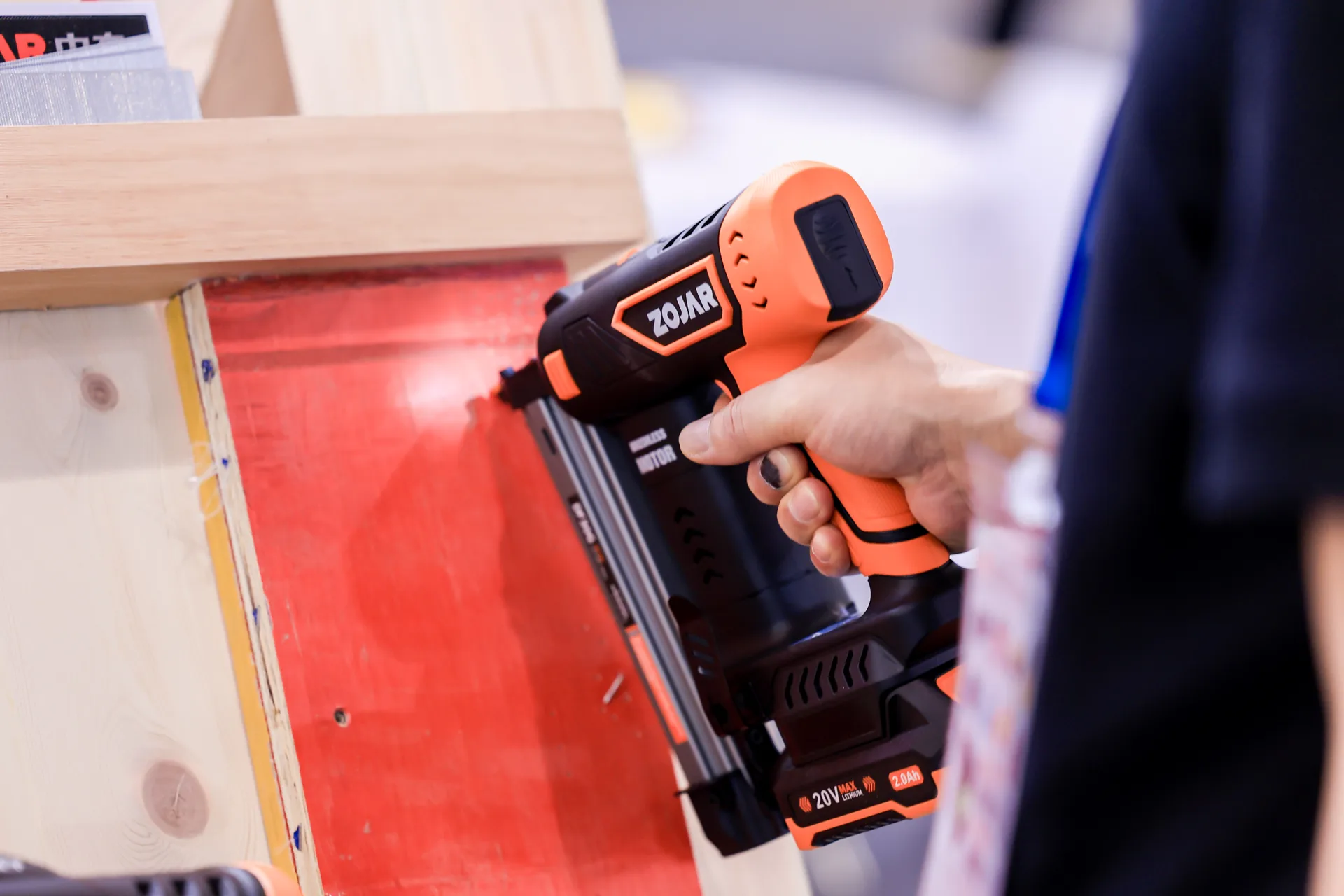
The variables that decide service life are mostly inside the housing: winding material, switch and trigger assembly, bearing grade, gear material, thermal protection, the glass content of the housing polymer, and how tightly the factory controls assembly torque. A copper-clad aluminium winding raises resistance for the same coil geometry, so a larger share of the input energy turns into heat. Heat degrades insulation and magnets, and the failure appears months later as a tool that cuts out under load. That mechanism, not the wattage on the label, is what separates a professional tool from a consumer one.
Many factories will quote the same housing at three component levels. Ask what changes between them. If the answer is vague, request the bill of materials for each level and write the accepted level into the purchase order, because a supplier running three builds on one line has three chances to ship the wrong one.
Then decide what you will measure. Winding resistance spread across a sample, no-load current, temperature rise under a defined duty cycle, and switch cycle life are cheap to record and hard to fake. Field return rate is the number you actually want, and the number a new supplier cannot give you.
Which Certifications Gate Your Market Access
CE marking on a power tool is a manufacturer’s declaration, not a certificate issued to the buyer. For most hand-held tools the route runs through the Machinery Directive 2006/42/EC [1], with electrical safety evaluated against EN 62841-1 [2], alongside the EMC Directive 2014/30/EU [3] and the RoHS Directive 2011/65/EU [4]. Material restrictions under REACH [5] sit next to those, and they move: the candidate list of substances of very high concern is updated twice a year, so a screening report older than the last update is a starting point rather than an answer.
One date matters for planning. Regulation (EU) 2023/1230 replaces the Machinery Directive and applies from 20 January 2027 [6], which means a technical file assembled in 2025 may need revision before a 2027 shipment.
| Market | Route | Basis | Verify before ordering |
|---|---|---|---|
| European Union | CE self-declaration | Machinery, EMC, RoHS, REACH | Technical file exists, standard edition current, test report matches the model list |
| Germany | GS mark, voluntary | Third-party test plus annual factory inspection | Valid certificate, factory address matches the audited site |
| Great Britain | UKCA | UK designated standards | Current recognition rules, because deadlines have moved before |
| United States | UL or ETL listing | UL 62841-1, plus FCC Part 15 where the tool has wireless or digital electronics [7] | Listing held under the actual manufacturer, not the brand owner |
| Multiple markets | IECEE CB certificate | IEC 62841 series test report | CB report converts to national marks without retesting the same items |
What a CE Declaration Does Not Cover
It does not prove that every unit leaving the factory matches the tested design, and it does not extend automatically to a variant with a different motor, switch, or battery pack. Accessories and chargers are separate evaluations, with chargers typically tested to EN 60335-2-29. If the declaration is held by a trading company rather than the factory that will build your order, ask who can legally support it, because the paperwork and the production site need to line up.
Checking a Certificate Before You Trust It
Four checks take about ten minutes. Look up the certificate number in the issuing body’s public database instead of accepting a PDF. Confirm the model list includes your exact SKU and voltage variant. Confirm the standard edition is the one currently in force. Confirm the applicant name and factory address match the supplier you are talking to. A certificate that fails any of these is not evidence, whatever it looks like.
Factory or Trading Company, and Does It Matter
It matters less than most buyers assume, and the wrong question is which type is better. The right question is who controls three things: the certificate, the bill of materials, and the inspection report.
A trading company that holds the certification, audits the factory it uses, and issues its own inspection reports can be a lower-risk partner than a factory that has never exported. A factory that winds its own motors, molds its own housings, and assembles packs in-house gives you fewer hidden suppliers. Ask for a process flow with every outsourced step marked. If the PCBA and the battery pack are both subcontracted, your quality depends on two companies you will never meet.
Useful screening questions before a visit: which processes are in-house, who supplies the cells, what happens to the gold sample when production starts, and what could change in this product without anyone telling me. That last one separates a controlled supplier from a hopeful one.
The RFQ Fields That Make Quotes Comparable
Quotes are hard to compare because the requests behind them were different. Six fields fix most of that.
| RFQ field | What to request | Why it matters |
|---|---|---|
| Component basis | Bill of materials per model, with motor, switch, bearing and gear specification | A price gap of a few dollars per unit usually hides a component substitution |
| Test basis | Standard number and edition, testing laboratory, report number | “CE approved” with no standard named is not a specification |
| Cell specification | Cell maker, model, capacity, and UN 38.3 summary | A cell change alters runtime, cycle life, and possibly the safety file |
| Inspection protocol | AQL levels, critical defect list, test items, who pays for re-inspection | Without agreed criteria, acceptance becomes a negotiation after the fact |
| Packaging and transit | Carton specification, drop height and orientations, container loading plan | Tools that arrive damaged cost more than the freight saving |
| Change control | Notification period, re-test requirement, written approval before substitution | Prevents a silent swap in month six |
Here is the same requirement, written twice.
Reject this RFQ line: “CE certified 20V brushless drill, 2.0Ah battery, good quality, best price.”
Replace it with: “20V max, 18V nominal, five-cell pack; brushless motor with copper winding; EN 62841-1 test report from a recognized laboratory with report number and edition stated; AQL 1.0 major and 2.5 minor, critical defect list agreed before production; UN 38.3 summary for the named cell; change notification 30 days in advance, with re-testing at supplier cost.”
The second version is longer, and it is also the version two suppliers can price against each other.
What a Sample Run Proves and What It Does Not
Every test record has a scope. Confusing that scope with a guarantee is how buyers end up with a container of tools that passed a test nobody can reproduce.
| Record | Method context | Responsible use | Do not infer |
|---|---|---|---|
| Dielectric strength test | Sample units from a pilot lot, at the factory’s routine test voltage | Confirms insulation integrity of those units at that moment | That production units a year later hold the same margin |
| Cycle life bench | Agreed duty cycle at controlled ambient temperature | Shows endurance under that duty and that ambient | Performance at higher site temperatures or with a different cell |
| Third-party safety report to IEC 62841-1 | One submitted configuration, one standard edition | Supports the declaration of conformity for that configuration | That every variant on the price list was evaluated |
| Packed carton drop test | Defined drop height and orientations | Supports the packaging choice for that carton and weight | That a heavier model ships safely in the same box |
| UN 38.3 test summary | Cell model as submitted for transport testing | Supports the transport classification of that cell | That the pack in your shipment contains that cell |
These records belong to the supplier that issued them, and none of them replaces your own incoming inspection. What they do is tell you which questions to keep asking.
Set acceptance criteria before the sample arrives, measure against them the day it does, and keep one sealed reference unit. When the second order lands, compare it with that sealed unit. Silent downgrades usually show up in the comparison long before they show up in a return rate.
Cordless Tools Need Their Own Battery Checklist
On a cordless tool, the battery is a second product with its own rules. Cell and pack safety is evaluated under IEC 62133-2 [8]. Transport by air, sea, or road depends on test summaries from Section 38.3 of the UN Manual of Tests and Criteria [9]. In Europe, Regulation (EU) 2023/1542 [10] replaces the older battery directive and phases in documentation obligations over several years, including requirements that travel with the battery rather than with the tool.
Two everyday details cause most of the confusion. A pack sold as 20V Max and one sold as 18V often contain the same five lithium-ion cells, because one figure describes nominal voltage and the other a maximum. Specify nominal voltage and cell count rather than the marketing label. And the charger is a separately evaluated product with its own plug type, input range, and certification file.
Ask for the cell maker and model in writing, and treat any change as a new evaluation. Battery interfaces also lock you in. If you plan a range of tools around one pack, that decision governs your SKUs, your spare parts, and your after-sales stock for years.
Comparing Power Tool Suppliers in One Week
The bottleneck in supplier evaluation is rarely information. It is comparison. Six factories in six cities takes three weeks of travel, and by the sixth visit the first one is a memory.
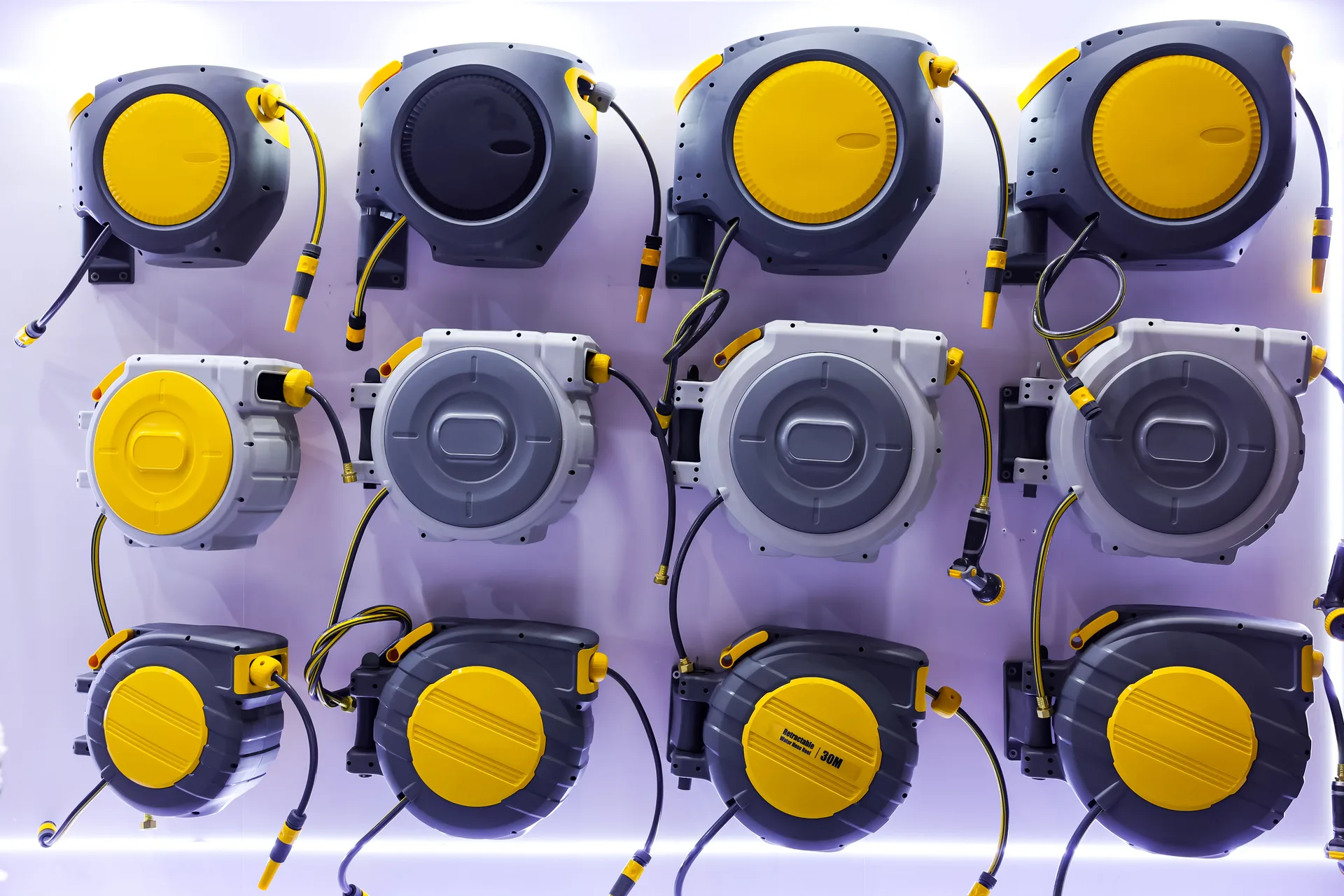
A concentrated exhibition compresses that. China International Hardware Show covers 120,000 square meters at SNIEC in Shanghai, with 2,977 exhibitors and 77,016 trade visitors from 123 countries and regions. In a single day a buyer can hold eight power tool suppliers against the same checklist: certificate holder name, model list, standard edition, cell supplier, and the feel of the tool in the hand. No email thread reproduces that.
Bring the RFQ table from this guide, ask every supplier for the same six fields, and score them the same evening. Buyers who work this way arrive at the second meeting with a shortlist instead of a stack of brochures.
Tell Us What You Are Sourcing Before You Book Travel
Send us the tool category, target market and required certification with the standard edition, voltage and battery platform, annual volume, target landed price, packaging requirement, and the inspection terms you work to. We use that list to pre-match exhibitors whose certificates and product lines fit, so your first meeting on site is a comparison rather than an introduction.
Trista Ming, Koelnmesse (Beijing) Co., Ltd., trista.ming@koelnmesse.cn, +86 21 6390 6161-832.
Power Tool Sourcing FAQ
Is a CE certificate enough to sell power tools in the EU?
There is no CE certificate to obtain for most hand-held tools. CE is a declaration you or the manufacturer sign, backed by a technical file, test reports to the applicable standards, and the EMC, RoHS, and REACH obligations alongside them. What buyers should actually request is the test report, the standard edition, and the model list it covers. German retailers may additionally ask for a GS mark, which is voluntary but requires a factory inspection.
How do I check whether a supplier’s certificate is genuine?
Start with the issuing body’s public database rather than the PDF in your inbox. Then check the model list for your exact SKU, confirm the standard edition is current, and confirm the applicant name and factory address match the company you are buying from. A certificate held by a third party is not automatically usable by your supplier. If any of those four checks fails, ask for the underlying report before discussing price.
Should I buy from a factory or a trading company?
Judge control, not category. Ask who holds the certificate, who owns the bill of materials, and who signs the inspection report. A trading company that audits its factories and issues its own inspection reports can be safer than an unexported factory. An in-house manufacturer gives you fewer hidden suppliers but may still subcontract the PCBA and battery pack, so ask for a process flow with outsourced steps marked.
How many samples should I test before placing an order?
Fewer than most buyers expect, if the samples come off the production line rather than from a prepared set. Test three to five units against criteria you wrote down in advance, record the results, and keep one sealed reference. What that proves is the condition of those units at that moment. What it does not prove is consistency across the next twelve months, which is why the change control clause in your purchase order matters more than the sample count.
References
[1] Directive 2006/42/EC of the European Parliament and of the Council of 17 May 2006 on machinery, Official Journal of the European Union, L 157, 2006.
[2] IEC 62841-1:2015, Electric motor-operated hand-held tools, transportable tools and lawn and garden machinery, Part 1: General requirements, International Electrotechnical Commission, Geneva, 2015.
[3] Directive 2014/30/EU of the European Parliament and of the Council of 26 February 2014 on the harmonisation of the laws of the Member States relating to electromagnetic compatibility, Official Journal of the European Union, L 96, 2014.
[4] Directive 2011/65/EU of the European Parliament and of the Council of 8 June 2011 on the restriction of the use of certain hazardous substances in electrical and electronic equipment, Official Journal of the European Union, L 174, 2011.
[5] Regulation (EC) No 1907/2006 of the European Parliament and of the Council concerning the Registration, Evaluation, Authorisation and Restriction of Chemicals (REACH), Official Journal of the European Union, L 396, 2006.
[6] Regulation (EU) 2023/1230 of the European Parliament and of the Council on machinery, Official Journal of the European Union, L 165, 2023.
[7] 47 CFR Part 15, Radio frequency devices, U.S. Federal Communications Commission, Washington, DC.
[8] IEC 62133-2:2017, Secondary cells and batteries containing alkaline or other non-acid electrolytes, Safety requirements for portable sealed secondary lithium cells and batteries made from them for use in portable applications, Part 2: Lithium systems, International Electrotechnical Commission, Geneva, 2017.
[9] UN Manual of Tests and Criteria, Section 38.3, Recommendations on the Transport of Dangerous Goods, United Nations, New York and Geneva.
[10] Regulation (EU) 2023/1542 of the European Parliament and of the Council concerning batteries and waste batteries, Official Journal of the European Union, L 191, 2023.
Contact us
-

Ms. Trista Ming
Tel.: +86 21 6390 6161 ext. 832
Trista.ming@koelnmesse.cnMr. Edward Gao
Tel: +86 10 6590 7766-765
Fax: +86 10 6590 6139
Edward.Gao@koelnmesse.cn