


High-Strength Fasteners: Construction and Manufacturing Demand
Demand for high-strength fasteners is being pulled by two different buyers at the same time. Construction projects specify preloaded structural bolting that an inspector will accept. Manufacturers need repeatable clamp load in machines, vehicles and energy equipment. Both ask for the same property classes, mostly 8.8 and 10.9, and both reject shipments for different reasons. The gap between those two requirements is where most sourcing mistakes begin, and it is a documentation gap more often than a metallurgy gap.
What Drives Demand for High-Strength Fasteners
A high-strength fastener is defined by what it carries, not by its shape. ISO 898-1 sorts carbon and alloy steel bolts, screws and studs into property classes such as 8.8, 10.9 and 12.9, and the two digits describe nominal tensile strength and the relationship between yield and tensile strength [1]. A 10.9 bolt and an 8.8 bolt can look identical in a parts tray. Heat treatment and the test record behind the head marking are what separate them.
Demand follows the joint, not the catalogue. In a preloaded connection, the bolt is tightened until the clamped parts compress, and the joint carries external load through that clamp force. The bolt then works mainly in tension rather than shear, and fatigue performance depends on staying above a minimum preload for the life of the structure. That is why a construction buyer asks about assemblies, torque and lubrication while a machinery buyer asks about clamp load retention under vibration.
The class a buyer requests usually maps to the application, and each application shifts the evidence requirement.
| Property class or grade | Typical demand segment | What the buyer has to verify |
|---|---|---|
| 8.8 | General steelwork, machine frames, brackets | Lot test report to ISO 898-1 and legible marking [1] |
| 10.9 | Preloaded structural connections, wind towers, heavy machinery | Assembly suitability data and a stated torque coefficient range |
| 12.9 | Presses, dies, tight-envelope joints | Coating choice and de-embrittlement control |
| A2-70 / A4-80 | Food equipment, marine, façade and coastal work | Grade and condition to ISO 3506-1, plus galling control [2] |
Stainless steel follows a separate logic. ISO 3506-1 assigns property classes such as 70 and 80 to austenitic grades A2 and A4 [2], and those numbers are not interchangeable with carbon steel classes that happen to use similar digits. A4-80 is not a drop-in replacement for a 10.9 part in a preloaded connection, because clamp load capability, stiffness and galling behaviour all differ.
Construction Demand Moves the Unit of Sale to the Assembly
Steel construction stopped buying loose bolts for critical connections a long time ago. EN 1090-2 sets the execution requirements for steel structures, including preloaded bolting and the documentation that has to accompany it [3]. Where a connection is designed as preloaded, the specification normally names a bolting assembly system rather than a single component: EN 14399-3 covers hexagon bolt and nut assemblies in the HR system, and the series requires suitability testing of the assembly as a working set [4].
North America runs a parallel route through ASTM F3125/F3125M, which covers high strength structural bolts at 120 ksi and 150 ksi minimum tensile strength in inch dimensions and 830 MPa and 1040 MPa in metric dimensions [5].
The distinction matters at inspection. A certificate showing that a bolt lot reached property class 10.9 under ISO 898-1 is not an assembly approval. Nut, washer, lubrication and the tested torque-tension relationship all belong to that approval. When a fabricator presents a bolt certificate as evidence for a preloaded connection, the missing document is the assembly test, not the tensile result.
Demand in this segment tracks the number of projects that specify preloaded connections, not the price of a single bolt. Prefabricated modules, bridge work, tower structures and long-span roofs all push volume toward assemblies with paperwork attached. Buyers who compare only piece price discover the difference when the steelwork inspector asks for the suitability report.
Manufacturing Demand Comes From Joints That Must Hold
Manufacturing buyers rarely order a bolting assembly. They order a joint that keeps clamp load through vibration, thermal cycling and years of service: machine frames, press columns, pump housings, suspension and battery-pack structures, solar tracker mounts. The evidence they need is different from a construction file, and the failure modes are different too.
Friction behaviour is the first gap. ISO 16047 defines torque and clamp force testing, which is how a supplier’s lubrication and thread condition become a number an engineer can design against [6]. Without that data, published torque tables are somebody’s assumption, and the first assembly line trial becomes the real test.
Coatings create the second constraint. Electroplated high-strength parts carry a hydrogen embrittlement risk that rises with strength, so the process has to be controlled and then proved. ISO 15330 describes a preloading test for detecting hydrogen embrittlement, and ISO 4042 defines electroplated coating systems for fasteners [7][8]. A supplier who describes the finish only as “zinc plated” has told you very little about the risk.
There is a real tradeoff here. A 12.9 part delivers high clamp load in a small envelope, but it narrows the acceptable coating routes and puts more weight on the plater’s process control. A 10.9 part with a zinc-flake system avoids the electroplating risk path, yet it changes the friction coefficient and therefore the torque the line has to apply. Neither choice is universally better; the joint design and the coating capability of the supplier decide it.
How to Read a Fastener Test Report Before You Trust It
Suppliers send documents. The useful question is what each document can legitimately support.
| Record | Method context | Responsible use | Do not infer |
|---|---|---|---|
| ISO 898-1 tensile test report | Sample from a defined lot, tested at room temperature [1] | Confirms the lot reached the marked property class | That the nut and washer in the same carton are equally controlled |
| EN 14399-3 assembly test | Complete assembly, specified lubrication, calibrated rig [4] | Supports preloaded use of that exact combination | That a thinner washer or a different lubricant keeps the same clamp force |
| ISO 15330 preload test | Plated high-strength parts, defined preload and geometry [7] | Indicates the plating process is controlled for embrittlement | That a thicker coating from another line is equally safe |
| Coating certificate to ISO 4042 | Stated coating class and thickness range [8] | Confirms which coating class was applied | Corrosion life in a specific coastal or chemical environment |
| Heat number traceability | Mill certificate linked to finished parts | Connects shipped parts to a raw material batch | That the mill certificate itself was independently verified |
| Third-party inspection report | Defined sampling plan, date and scope | Confirms what was found in that sample on that date | That unshipped production will match it |
These are document types, not claims about any particular factory. A laboratory report speaks for the sample it received, under the conditions recorded on it. Everything outside that sentence still needs its own check.
An RFQ Checklist for High-Strength Fasteners
Most fastener disputes start in the inquiry, not in the factory. A short, specific RFQ removes guesswork for the supplier and gives you comparable quotes.
| RFQ field | What to request | Why it matters |
|---|---|---|
| Property class and standard edition | Class plus the standard and year, for example 10.9 to ISO 898-1 [1] | Two suppliers can quote “10.9” against different test bases |
| Assembly or system | EN 14399-3 or ASTM F3125 assembly, with suitability test report [4][5] | A bolt-only certificate stalls the steelwork approval |
| Coating and friction | Coating class, lubricant, torque coefficient or k-factor range [6] | Preload scatter becomes loose joints or over-tensioned bolts |
| Traceability and marking | Heat number, mill certificate, head marking to the standard | Mixed lots and unmarked parts cannot be verified on arrival |
| Test and conformity documents | Lot test reports, declaration of conformity, de-embrittlement record [7] | A customer or site audit can hold the shipment without them |
| Packing and protection | Rust protection, carton marking, quantity per box | Coating damage in transit turns into a corrosion claim |
Here is the difference in practice.
Reject this line: “10.9 hex bolts, hot dip galvanized, 5,000 pieces, best price FOB.”
Replace it with: “M20 x 60 hexagon bolt assemblies, HR system to EN 14399-3, property class 10.9, hot dip galvanized, complete with nut and washer, marking to the standard, suitability test report and torque coefficient results, friction coefficient range stated, 5,000 assemblies, FOB Shanghai.”
The second version is not longer for its own sake. It lets two suppliers quote the same object, and it gives you a document list to check before payment rather than after arrival.
Sourcing High-Strength Fasteners in Person
Fasteners are one of the hardest categories to judge from a screen. Marking depth, thread finish, coating uniformity and the condition of a washer face are things you read with your eyes and hands in about ten seconds at a booth. That is why the category still draws buyers to Shanghai.
China International Hardware Show covers 120,000 square meters and brings together nearly 3,000 exhibitors, with 77,016 professional visitors from 123 countries and regions at the last edition. Fastening products sit alongside hand tools, power tools, building hardware, abrasives, welding supplies and intelligent locking systems, which means a buyer working on a full project list can compare categories in one trip instead of four.
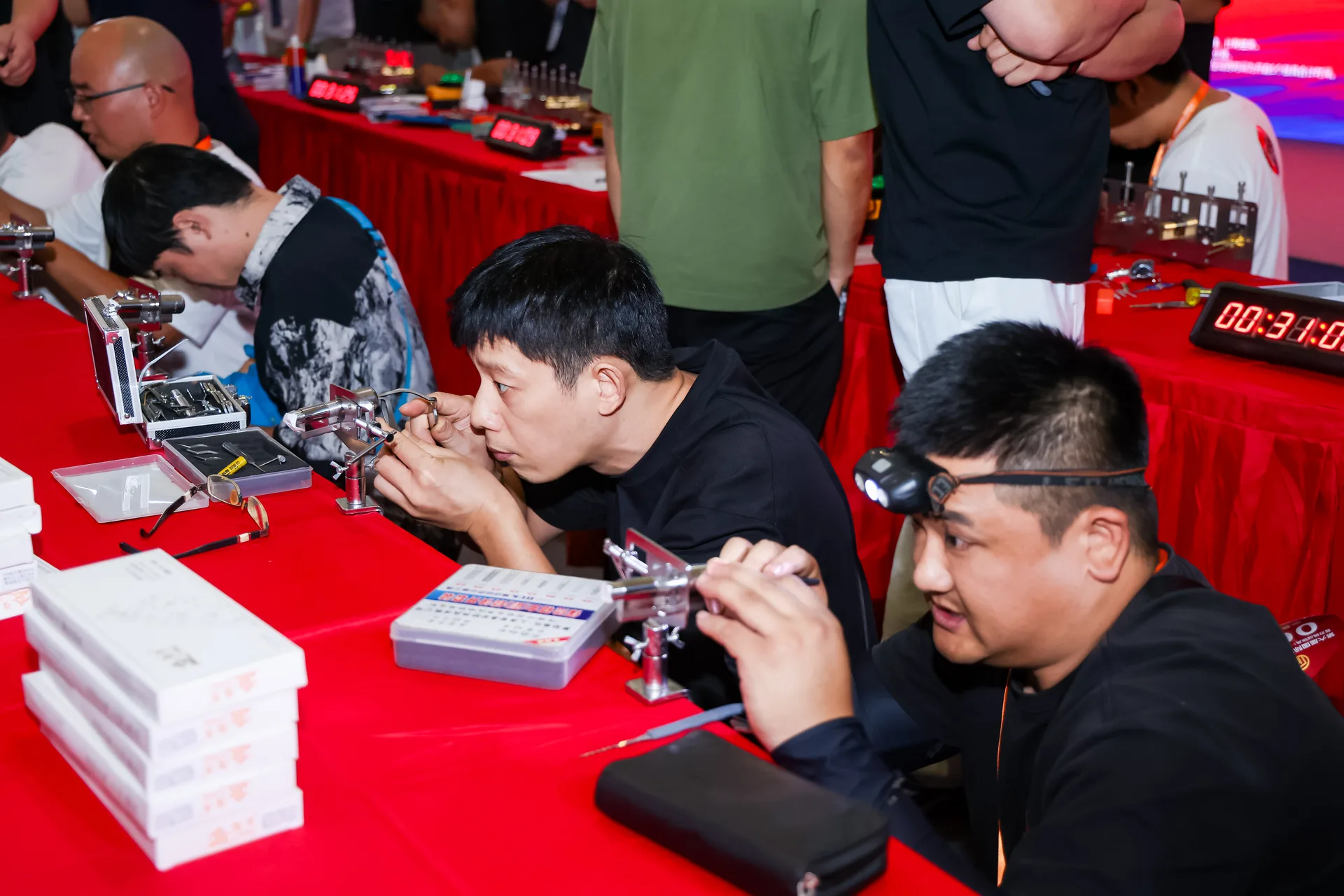
Bring your RFQ and your document list. Ask the exhibitor to show you the assembly, not just the bolt, and ask which test house issued the report in the folder. A supplier who can open the right page quickly has usually answered the question before.
What to Re-Check in 2026
Several assumptions age faster than the products themselves, so put a review date on them.
Confirm which edition of the relevant standard your destination market currently enforces. A standard’s publication date does not prove identical adoption at every project or every buyer’s specification.
Re-confirm de-embrittlement and coating records after any change of plater, coating class or strength class, since a report from a previous process does not carry over.
Check that an assembly approval still matches the exact nut, washer and lubrication combination being shipped, particularly after a cost-reduction exercise.
Separate search interest from orders. Rising online interest in high-strength fasteners is a signal about attention, not proof of project volume in your market.
Confirm with your customs broker whether current trade measures apply to your HS code before you fix a landed cost in a quotation.
Re-test one joint from each new production lot during the first months of a supply relationship rather than relying on the approval sample.
Send Your Specification, Not a One-Line Price Request
Tell us the property class and standard edition, the assembly or system you are working to, the coating and friction requirement, the marking and traceability you need, the documentation package your customer requires, and the delivery window. With those six items, the first round of supplier conversations becomes a comparison instead of a translation exercise.
Koelnmesse (Beijing) Co., Ltd. organizes China International Hardware Show with the China National Hardware Association. Tel: +86 21 6390 6161-832. Email: trista.ming@koelnmesse.cn.
FAQ
What is the difference between a 10.9 bolt and a 10.9 bolting assembly?
A 10.9 bolt is a single component that has met the mechanical property requirements of ISO 898-1 [1]. A bolting assembly adds the nut, washer and lubrication, and is tested as a system: EN 14399-3 assemblies, for example, go through suitability testing as a complete set [4]. The practical consequence is that a bolt certificate does not authorize a preloaded connection. If your drawing calls for a preloaded assembly, ask for the assembly test report and the torque coefficient range, and check that the nut and washer in the carton match the tested combination.
Can stainless steel fasteners replace 10.9 high-strength fasteners?
Usually not, and the reason is mechanical rather than commercial. Austenitic stainless grades are specified under ISO 3506-1 with property classes such as 70 and 80 [2], and their clamp load capability, stiffness and galling behaviour differ from a quenched and tempered carbon steel 10.9 part. Stainless earns its place in food equipment, coastal façades and marine fittings where corrosion resistance decides the choice. If you need preload plus corrosion resistance, the more common route is a coated carbon steel part with a controlled friction coefficient.
How do I check hydrogen embrittlement risk on plated high-strength fasteners?
Start with the strength class and the coating process. Electroplating on higher-strength parts is the risk path, and the control is a documented process plus a test, not a reassuring sentence. Ask which coating standard the parts are made to, here ISO 4042 [8], whether a de-embrittlement step is recorded, and whether the supplier can show a preloading test result such as ISO 15330 [7]. Then confirm the report belongs to the same plater and coating class as your order, because a result from a different line does not transfer.
Do construction and manufacturing buyers need different documents?
Yes, and the difference appears at inspection. A construction buyer normally needs the assembly approval, the declaration of conformity for the components and marking that matches the standard, because the steelwork is checked against a specification such as EN 1090-2 [3]. A manufacturing buyer needs torque-tension data, coating class and lot traceability that ties the finished part back to the heat number [6]. One document set rarely satisfies both, so state your end use in the RFQ instead of assuming the supplier will guess it.
References
[1] ISO 898-1:2013, “Mechanical properties of fasteners made of carbon steel and alloy steel — Part 1: Bolts, screws and studs with specified property classes — Coarse thread and fine pitch thread,” ISO, Geneva, 2013.
[2] ISO 3506-1:2020, “Fasteners — Mechanical properties of corrosion-resistant stainless steel fasteners — Part 1: Bolts, screws and studs with specified grades and property classes,” ISO, Geneva, 2020.
[3] EN 1090-2:2018, “Execution of steel structures and aluminium structures — Part 2: Technical requirements for steel structures,” CEN, Brussels, 2018.
[4] EN 14399-3:2015, “High-strength structural bolting assemblies for preloading — Part 3: System HR — Hexagon bolt and nut assemblies,” CEN, Brussels, 2015.
[5] ASTM F3125/F3125M, “Standard Specification for High Strength Structural Bolts and Assemblies, Steel and Alloy Steel, Heat Treated, Inch Dimensions 120 ksi and 150 ksi Minimum Tensile Strength, and Metric Dimensions 830 MPa and 1040 MPa Minimum Tensile Strength,” ASTM International, West Conshohocken, PA, 2015.
[6] ISO 16047:2005, “Fasteners — Torque/clamp force testing,” ISO, Geneva, 2005.
[7] ISO 15330:1999, “Fasteners — Preloading test for the detection of hydrogen embrittlement — Parallel bearing surface method,” ISO, Geneva, 1999.
[8] ISO 4042:2018, “Fasteners — Electroplated coating systems,” ISO, Geneva, 2018.
Contact us
-

Ms. Trista Ming
Tel.: +86 21 6390 6161 ext. 832
Trista.ming@koelnmesse.cnMr. Edward Gao
Tel: +86 10 6590 7766-765
Fax: +86 10 6590 6139
Edward.Gao@koelnmesse.cn