


Fastener Suppliers in China: How Buyers Evaluate Them
A fastener order rarely fails on price. It fails because the drawing, the inspection certificate and the parts in the box described three different things, and nobody established which one was true. Buyers who evaluate fastener suppliers in China well separate screening from acceptance. Screening tells you whether a supplier is a real and capable entity. Acceptance tells you whether this lot, from this heat, after this heat treatment and this coating, meets the drawing. Most sourcing mistakes come from letting a document that belongs to the first stage answer a question that belongs to the second.
What Buyers Screen First in a Chinese Fastener Supplier
The first stage is cheap and takes a day. Confirm that the entity quoting is the entity that will ship and the entity named on the invoice: business license, registered scope, legal representative, factory address, and an export record you can check. Then ask the question that shapes everything after it. Are you a factory, a trading company, or a factory with a trading arm?
All three can be legitimate. A trading company often consolidates a mixed order across several plants and handles coating and plating subcontracts, which is real work. A factory controls its own process and can show you the furnace. What matters is knowing which one you are buying from, because the answer changes what you can verify and what you are trusting.
The second stage is technical, and it starts with a single distinction. Property class is created in the heat treatment, not in the header. Two suppliers can both quote M8 bolts at class 8.8, one quenching and tempering in the same building, the other sending blanks out to a subcontractor whose name never appears on the quotation. In the first case you can audit the process that determines the class. In the second you are auditing a company that does not own the variable your specification depends on.
Before samples, ask four questions. Where does heat treatment happen? Which processes leave your building? Which standard and which edition defines the property class you quoted? Who signs the inspection report, and are they employed by you? Answers you can cross-check in a day will save you a month of sample rounds.
Reading the Specification Before You Compare Suppliers
“Grade 8.8, zinc plated” compresses two standards into five words and leaves both incomplete. Property class 8.8 is defined in ISO 898-1:2013 [1] as a combination of steel chemistry and heat treatment that produces a nominal tensile strength of 800 MPa and a lower yield strength of 640 MPa. Class 10.9 raises those to 1000 and 900 MPa and changes the risk profile: higher strength steel is more sensitive to hydrogen embrittlement when electroplated, which is why baking after plating matters at 10.9 and above.
Market conventions then sit on top of the class system. US structural bolting is usually specified to ASTM F3125, European preloaded assemblies to the EN 14399 series. Those are different documents with different test regimes, and a class 8.8 bolt is not a substitute for either. If your engineer specifies one system and your supplier quotes the other, the price difference you are comparing is not a price difference at all.
| Claim on the quotation | What it can legitimately support | What it does not establish |
|---|---|---|
| “Grade 8.8” | The supplier intends ISO 898-1:2013 [1] property class 8.8 | That the delivered lot reached 800 MPa, or that dimensions sit in any tolerance grade |
| ISO 9001 certificate | A management system was audited within the scope printed on the certificate | That the scope covers fastener manufacture, or that any lot met a specification |
| EN 10204 3.1 certificate | The mill reported the stated chemistry and mechanical results for a named heat | That the finished part, after heat treatment and coating, still meets them |
| “500 hours salt spray” | One coated specimen behaved in one test condition | Service life in a wetter climate, or behaviour after the coating is scratched |
| CE marking | The product fell within a directive’s scope and a declaration was made | Approval for a specific structural or safety application |
The pattern behind those rows is the one that causes most disputes. A claim that was true at one stage gets read as if it were true at a later stage. A 3.1 certificate is a genuine document with genuine results, and it describes wire rod. It cannot describe the finished bolt, because between the two sits a heat treatment the mill never saw. Words like “medium strength” and “high strength” are not a specification at all; they are a supplier’s adjective, and two suppliers will attach different numbers to it.
Which Quality Documents Prove What
Start with the management system, then read its scope line before anything else. An ISO 9001:2015 [2] certificate covering “trading of hardware products” says something different from one covering “manufacture of bolts, screws and nuts”, and a certificate whose site address is an office tower tells you where the paperwork lives, not where the parts are made.
Material paperwork comes next. Under EN 10204:2004 [3], a type 3.1 certificate is issued by the manufacturer’s independent inspection representative and carries a heat number, chemistry and mechanical results. Type 2.2 is a statement of compliance without test results, which is fine for commodity stock and weak for anything you intend to trace.
Test reports are only as good as the laboratory and the method statement. A report from an ISO/IEC 17025:2017 [4] accredited laboratory should name the method and its edition, identify the sample, and compare each result against a stated limit. A table of numbers with no method and no limit is decoration.
Coating is where vague numbers do the most damage. ISO 4042:2018 [5] defines electroplated coating systems by thickness class and covers the baking requirement after plating. ISO 9227:2022 [6] defines the salt spray test itself. A supplier who says “500 hours” without a thickness class and a method is quoting a result you cannot reproduce or compare.
Finally, check the gauges. Every dimensional measurement should carry an instrument ID and a calibration date. An uncalibrated gauge converts a measurement into an opinion.
| Document | What it establishes | What to check on the page |
|---|---|---|
| Business license | A legal entity exists with a registered scope | The name matches the contracting and shipping entity |
| ISO 9001:2015 certificate [2] | An audited system within a stated scope | Scope wording, site address, certification body, expiry date |
| EN 10204:2004 type 3.1 [3] | The mill’s declared chemistry and mechanicals for a heat number | Heat number, product form, edition, signature of the inspection representative |
| Heat treatment batch record | Time, temperature, quench and temper conditions, hardness results for a batch | The batch ID links to your order, and hardness sits inside the ISO 898-1 range |
| Coating report to ISO 4042:2018 [5] and ISO 9227:2022 [6] | Coating system, thickness class, salt spray outcome under a named method | Thickness class, hours, specimen preparation, whether edges were scribed |
| Inspection report with a stated sampling basis | What was measured, how many pieces, against which limits | Gauge IDs, calibration dates, and the sampling plan, for example ISO 3269:2019 [7] |
How to Test a Sample Lot in Two Weeks
Fix the acceptance basis in writing before the sample ships. Drawing revision, standard and edition, property class, coating class, sampling plan, and who pays for a failed lot. Verbal acceptance is how a sample round becomes three.
Draw the sample properly. ISO 3269:2019 [7] sets out acceptance inspection for fasteners, and a scoop from the top of a carton is not a sample of the lot. Ask where the parts came from and how many were taken.
Measure dimensions first, because it is fast and cheap. Thread ring and plug gauges, plus the features the drawing actually controls: bearing face diameter, shank, length under head, straightness. Most rejections show up here before any lab is involved.
Use hardness as an early signal on heat treatment. If hardness falls outside the range ISO 898-1 sets for the class, the furnace has a problem and full tensile testing will only confirm it more expensively.
Run the mechanical tests the class requires: full size tensile and proof load, the wedge test for bolts, and torque-clamp force per ISO 16047:2005 [8] if the joint is preloaded. Torque-clamp force is where friction, coating and lubrication show up together, and it is often the number that decides whether an assembly feels right on the line.
Check coating and embrittlement risk last. Thickness, adhesion, salt spray, and for class 10.9 and above with electroplating, evidence that the parts were baked after plating.
Two weeks is realistic when you book the laboratory before the sample arrives and pre-agree the test list. It is not realistic if the supplier still has to cut tooling, and a supplier who promises both at once is telling you something about how they quote dates.
Factory Capability You Can Verify on Site
Capacity is visible without asking. Count the headers, note their tonnage, ask cycle time per part, and watch a die change. A plant with two headers running one shift has a different capacity story than a quotation implies, particularly if the same lines also feed three domestic distributors.
Thread production is the next thing to look at. Rolling forms the thread and leaves a favourable residual stress pattern at the root, which matters where vibration or fatigue is in play. Cutting removes material and costs less per piece. In a static, lightly loaded joint the difference rarely shows; in a fatigue application it is the difference between a part that lasts and one that cracks at the first thread.
Then walk to the furnace, or ask why you cannot. In-house heat treatment means you can see the quench medium, the loading pattern, and last week’s batch records without anyone making a phone call. Outsourced heat treatment is common and not automatically disqualifying, but the supplier should be able to name the subcontractor, describe how parts are transported, and show the batch records that come back.
Sorting and packing are where small suppliers quietly fall short. Ask whether 100% optical sorting is available for safety-critical parts, and look at how the order will be packed: VCI paper, desiccant, carton strength, pallet condition. Rust claims usually arrive eight weeks later, after a sea freight leg, and they are hard to win once the container is open.

Where Cheap Fasteners Get Expensive
Unit price is a small share of what a fastener costs you. Landed cost adds freight, duty, and any trade measures attached to the HS code. Failure cost adds sorting, rework, line stoppage, and the customer conversation nobody wants. The gap between the cheapest quote and the sensible one is usually hiding in three places: coating thickness class, thread process, and sorting level.
Some conditions are worth stating plainly, because they decide the purchase more than the price does:
Do not choose on unit price when the joint is preloaded or the part is safety-critical. In those applications the specification is the product.
Do not accept a supplier who cannot produce furnace records when the property class is the whole specification. You are buying a heat treatment outcome, not a shape.
Do not assume two quotes carry the same coating. Ask for the thickness class and the salt spray basis in writing before you compare.
A lower tier is a legitimate choice for decorative, low-load or retail-packed hardware, where the realistic failure is cosmetic rather than structural. Paying structural prices for a shelf bracket is its own kind of waste.
Market access belongs in the same calculation. RoHS [9] restricts substances in electrical and electronic equipment, and REACH [10] places registration and restriction duties on chemicals and articles placed on the EU market. Structural, marine and protective equipment carry their own approval routes. Before you fix a price, confirm whether your HS code sits under anti-dumping or countervailing measures in your destination market, and remember that a supplier’s declaration of compliance does not move importer liability to the supplier.
Red Flags and the Checks That Confirm Them
Red flags are rarely one dramatic fact. They are inconsistencies between two documents that should agree, or an answer that arrives faster than the question deserved. The useful response is not suspicion but a specific check.
| Red flag | The check that confirms it | What it changes |
|---|---|---|
| A property class with no standard or edition named | Ask which standard and edition the class refers to | Without it, two quotations cannot be compared at all |
| A certificate photocopy with the heat number obscured | Request the original and cross-check it against the heat treatment batch record | Traceability from rod to finished part is broken |
| A salt spray figure with no coating class and no method | Request the report to ISO 9227:2022 [6] and the thickness class under ISO 4042:2018 [5] | The number is uncomparable and likely unrepeatable |
| Heat treatment outside the certified scope | Ask who heat treats, where, and whether that site is in the audit scope | The property class depends on a process nobody audited |
| A lead time well below the supplier’s stated capacity | Ask for the production schedule and the backlog sitting in front of your date | Optimistic dates often hide a second-tier subcontractor |
| No stated sampling plan | Ask for the acceptance sampling basis, not the sample result | You cannot know the defect rate you are agreeing to |
Where to Vet Fastener Suppliers in Person
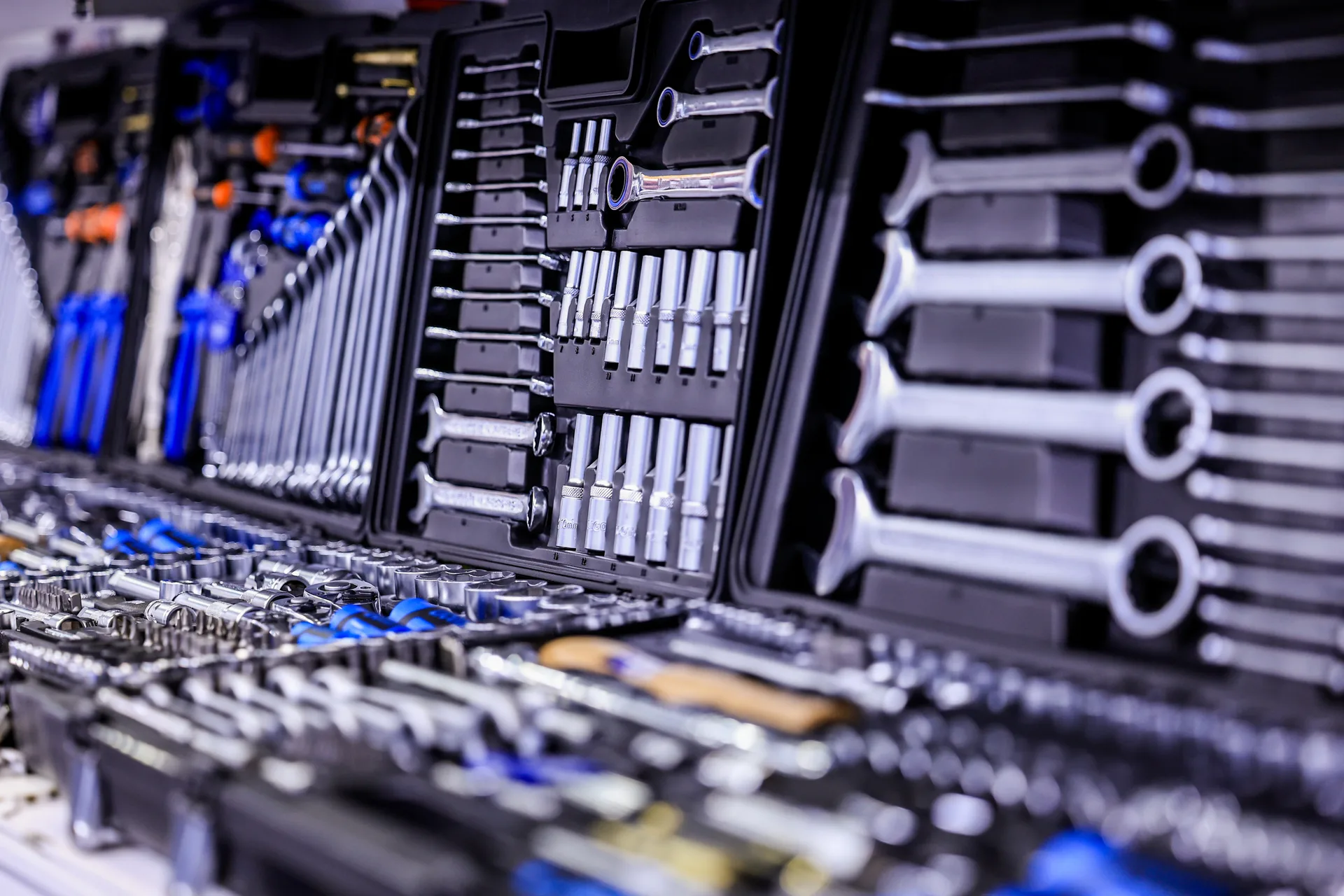
A trade fair compresses the screening stage, which is exactly the stage that is slowest from a desk. Fastening products sit alongside hand tools, building hardware and locking systems at China International Hardware Show, across 120,000 square meters at SNIEC in Shanghai, with nearly 3,000 exhibitors and more than 77,000 professional visitors from 123 countries and regions at the 2025 edition. In two days you can put the same four questions to eight suppliers, compare how quickly each answers, and notice which ones brought an engineer instead of a salesperson.
Keep the limitation in view. A booth is a showroom, not a factory. The fair does not replace a sample test or an audit, and a well-dressed stand proves nothing about a furnace. What it does is shorten the list of suppliers worth spending an audit on, and let you hold two samples of the same part from two suppliers side by side before either of them becomes a purchase order.
Bring the drawing, the current specification with the standard and edition marked, and one rejected part if you have one. A physical failure sample changes the conversation faster than any questionnaire.

Send Your Drawing Before You Book the Flight
The most useful thing you can do before Shanghai is put your requirement in writing and send it ahead, so the matchmaking team can pre-match it with exhibitors who actually make that part. Register as a visitor, and if you purchase in volume, apply for the Hosted Buyer Programme. Both routes give you a schedule instead of a hall to wander.
Send us these fields and we will route them to the right suppliers: property class and the standard plus edition it is defined against, material and coating class, dimensions with tolerances, annual volume and order pattern, the test method and acceptance basis you will apply, and your destination market with its certification requirements. One page is enough.
Trista Ming
CIHS Buyer Services Team
trista.ming@koelnmesse.cn
+86 21 6390 6161-832
FAQ
How long does it take to qualify a new fastener supplier in China?
Expect the first order to take longer than the repeat order, because tooling, first-article approval and one round of sample testing all sit in front of production. The variable you control is preparation: a drawing with a standard and edition, a pre-agreed test list, and a booked laboratory remove most of the delay. The variable you do not control is the supplier’s heat treatment queue. Ask where your order sits in it before you commit to a delivery date, and never compress first-article approval to protect a launch date.
Is a trading company worse than a factory for fasteners?
Not by category. A trading company often earns its margin by consolidating a mixed container across several plants and managing coating and plating subcontracts, which is genuine coordination work. A factory controls its own processes and can show you the furnace. What matters is whether the party you are buying from can name and prove the processes your specification depends on. Judge the traceability, not the label, and check that the entity quoting is the entity shipping.
Do I need third-party inspection on every order?
No. Third-party inspection earns its cost when the part is safety-critical, when the supplier is new, when a process changed since the last order, or when you have already had a nonconformity from that line. For repeat orders from a supplier with a stable history and your own incoming checks in place, routine third-party inspection often duplicates work. Decide per supplier and per part, and write the trigger conditions into the contract so the decision is not re-argued each shipment.
What does a property class 8.8 bolt actually guarantee?
It guarantees the mechanical property combination defined in ISO 898-1:2013 [1]: a nominal tensile strength of 800 MPa and a lower yield strength of 640 MPa, achieved through steel chemistry and heat treatment, with hardness inside the specified range. It does not guarantee dimensional tolerances, coating performance, torque behaviour in your joint, or freedom from hydrogen embrittlement risk. Those come from separate standards and separate tests, and a quotation that mentions only the class has described roughly a third of what you need.
How do I check whether a supplier’s certificate is genuine?
Work backwards from the identifier. Take the heat number on the 3.1 certificate and match it against the heat treatment batch record and the packing list for your order. Check that the certificate’s issuing body and inspection representative are traceable, that the standard and edition are current, and that any laboratory report comes from an ISO/IEC 17025:2017 [4] accredited facility with the method stated. A certificate that cannot be tied to a batch in your shipment is a document, not evidence.
References
[1] ISO 898-1:2013, “Mechanical properties of fasteners made of carbon steel and alloy steel — Part 1: Bolts, screws and studs with specified property classes — Coarse thread and fine pitch thread,” International Organization for Standardization, Geneva, 2013.
[2] ISO 9001:2015, “Quality management systems — Requirements,” International Organization for Standardization, Geneva, 2015.
[3] EN 10204:2004, “Metallic products — Types of inspection documents,” European Committee for Standardization, Brussels, 2004.
[4] ISO/IEC 17025:2017, “General requirements for the competence of testing and calibration laboratories,” International Organization for Standardization, Geneva, 2017.
[5] ISO 4042:2018, “Fasteners — Electroplated coating systems,” International Organization for Standardization, Geneva, 2018.
[6] ISO 9227:2022, “Corrosion tests in artificial atmospheres — Salt spray tests,” International Organization for Standardization, Geneva, 2022.
[7] ISO 3269:2019, “Fasteners — Acceptance inspection,” International Organization for Standardization, Geneva, 2019.
[8] ISO 16047:2005, “Fasteners — Torque/clamp force testing,” International Organization for Standardization, Geneva, 2005.
[9] Directive 2011/65/EU of the European Parliament and of the Council of 8 June 2011 on the restriction of the use of certain hazardous substances in electrical and electronic equipment, Off. J. Eur. Union, 2011.
[10] Regulation (EC) No 1907/2006 of the European Parliament and of the Council concerning the Registration, Evaluation, Authorisation and Restriction of Chemicals (REACH), Off. J. Eur. Union, 2006.
Contact us
-

Ms. Trista Ming
Tel.: +86 21 6390 6161 ext. 832
Trista.ming@koelnmesse.cnMr. Edward Gao
Tel: +86 10 6590 7766-765
Fax: +86 10 6590 6139
Edward.Gao@koelnmesse.cn