


Door and Window Hardware: Materials That Decide Performance
Door and window hardware fails for reasons that rarely appear on a quotation. A handle listed as 304 stainless may be 201; a hinge rated for high cycle counts may have been tested on a much lighter leaf; a finish described as salt spray tested may have passed at 96 hours in one laboratory and 480 in another. For buyers sourcing from China, the alloy grade and the test method behind it decide whether a container of hardware performs for a decade or a season. This guide covers the materials that matter, the performance tests worth reading, and the market shifts now changing what European and North American buyers specify.
Which Materials Decide Door and Window Hardware Performance
Two handles can share a drawing, a finish, and a price band, and still be different products. The difference sits in the alloy, the wall thickness, and the process behind the surface. Buyers who specify only “stainless steel” hand that decision to the factory.
Austenitic stainless steel dominates exposed door and window hardware because the chromium oxide layer repairs itself after scratching. EN 1.4301 (304) covers most interior and sheltered exterior applications. EN 1.4401 and EN 1.4404 (316 and 316L) add molybdenum, which raises resistance to chlorides, and that matters for coastal projects, pool buildings, and any specification where de-icing salts reach the door. A 201-grade substitution looks identical in a photograph and fails within a season in the same environment.
Zinc die-casting (Zamak 3 and Zamak 5) carries most complex handle and rosette shapes because it holds dimensional accuracy at high volume. Aluminum extrusion (EN AW-6063 T5 or T6) serves window handles and profile-mounted hardware, where the anodized or powder-coated layer, not the alloy, provides the corrosion performance. Brass (CW614N and CW617N) remains the default for cylinder bodies and threaded components. Internally, POM and glass-filled PA66 do the low-friction work in latch cams and spindle bushes.
| Material | Typical grade | What it decides | Do not infer |
|---|---|---|---|
| Austenitic stainless steel | EN 1.4301 (304) | General interior and sheltered exterior use; corrosion resistance comes from the chromium oxide layer | That 304 suits coastal or chlorine-rich environments |
| Austenitic stainless steel | EN 1.4401 / 1.4404 (316 / 316L) | Molybdenum addition improves chloride resistance | That a 316 label guarantees a marine-grade product; passivation and surface finish still decide |
| Zinc die-cast | Zamak 3 / Zamak 5 | Dimensional accuracy for complex handle and rosette shapes | That a die-cast body matches a machined or forged body in load capacity |
| Aluminum extrusion | EN AW-6063 T5 / T6 | Lightweight window handles and profile hardware | That the alloy alone provides corrosion performance; the coating does |
| Brass | CW614N / CW617N | Machinability, threading, cylinder bodies | That all brass is the same alloy; grade and lead content vary |
| Engineering polymer | POM, PA66-GF | Low-friction internal parts, latch cams, spindle bushes | That polymer parts suit high-cycle commercial use without test evidence |
Why Corrosion Ratings Depend on the Test Method
“Salt spray tested” is not a specification. It describes a family of tests, run for different durations, judged against different failure criteria. EN 1670 sets corrosion resistance classes for building hardware and points to neutral salt spray testing under ISO 9227 [1][2]. The class number is what travels with the product; the hours behind it are what you compare.
The failure criterion matters as much as the duration. One laboratory records the first sign of red rust; another records base metal corrosion only after the coating has broken down. Two reports can both say 240 hours and describe different outcomes.
| EN 1670 grade | Neutral salt spray duration | Typical service environment | Do not infer |
|---|---|---|---|
| Grade 1 | 24 h | Interior, low humidity | Nothing about coastal use |
| Grade 2 | 48 h | Interior, occasional condensation | Nothing about exterior exposure |
| Grade 3 | 96 h | Sheltered exterior, urban | Nothing about chloride-rich air |
| Grade 4 | 240 h | Exposed exterior, industrial | Nothing about a marine atmosphere |
| Grade 5 | 480 h | Severe, coastal specification | Nothing about a specific project life |
Salt spray hours are a comparative laboratory measure, not a service-life forecast. A grade 5 handle on a coastal hotel does not carry a ten-year guarantee because it passed 480 hours. It carries a lower risk of early cosmetic failure than a grade 3 handle in the same location, and that is the only claim the report supports.
The Cycle Tests That Separate Reliable Suppliers
Mechanical durability is where cheap hardware reveals itself, and where test reports are most often quoted without the grade. EN 1906 covers lever handles and knob furniture and sorts products into use categories by cycle count and torque [3]. EN 1935 does the same for single-axis hinges, with the tested leaf mass and dimensions forming part of the result [4]. EN 12209 covers mechanically operated locks, latches, and locking plates [5].
The trap is transferability. A hinge that passed a high cycle count on a 40 kg leaf tells you nothing about its behavior on an 80 kg fire door. A lock tested with one forend and fixing pattern does not automatically qualify a different configuration. Ask for the tested assembly, not only the certificate number.
| Test | Standard | What it measures | What to request |
|---|---|---|---|
| Handle durability | EN 1906 | Lever and knob furniture under repeated operation and torque | The declared use grade and the test report number |
| Hinge durability | EN 1935 | Single-axis hinge under cyclic loading at rated leaf mass | The grade plus the leaf mass and dimensions tested |
| Lock durability | EN 12209 | Lock and latch mechanism under cyclic operation | The grade and the forend and fixing configuration tested |
| Corrosion resistance | EN 1670 | Coating and base metal resistance to neutral salt spray | The grade and the hours achieved |
| Burglar resistance | EN 1627 | Resistance to static and dynamic attack, RC1 to RC6 | The RC class and the glazing and assembly tested |
| Fire door hardware | EN 1634-1 | Assembly performance under fire test | The complete tested door assembly, not the hardware alone |

Where the Real Cost Differences Sit
When two quotations for the same drawing differ sharply, the gap usually traces to one of six places. None of them is a greedy factory. All of them change what arrives in the container.
| Cost driver | What changes | Effect on unit price | Effect on failure risk |
|---|---|---|---|
| Alloy grade | 201 versus 304 versus 316 | Moderate to large | High where chlorides are present |
| Wall thickness and mass | Material volume per piece | Roughly proportional | High on load-bearing parts |
| Plating or coating thickness | Process time and chemistry | Moderate | High in humid or coastal service |
| Forming route | Die-cast versus machined versus forged | Large at low volume | Depends on the load case |
| Test and certification scope | Laboratory fees and sample count | Small per unit at volume | Low, but gates market access |
| Packaging and protection | Materials and handling | Small | High for mixed-load containers |
The practical consequence is that price comparison only works at fixed specification. Ask each supplier to quote against the same alloy, the same coating thickness, the same test grade, and the same packaging. A quote that omits the test grade is not cheaper. It is a different product.
What European and North American Buyers Must Verify
The most common misunderstanding in this category concerns CE marking. Door and window hardware rarely carries a CE mark of its own. The mark sits on the doorset or window under EN 14351-1, and the hardware is a component that feeds the assembly’s declared performance [6]. That distinction changes the question you ask: not “is it CE certified” but “which assembly was tested, and does my hardware match it”.
Burglar resistance follows EN 1627, which classifies resistance to static and dynamic attack from RC1 to RC6 [7]. Fire performance follows EN 1634-1 and applies to the complete door assembly, including hardware, closer, and intumescent seals [8]. A panic device tested to EN 1125 or EN 179 is qualified as part of that assembly, not in isolation.
On the materials side, RoHS (Directive 2011/65/EU) restricts hazardous substances in electrical and electronic equipment, which now reaches smart locks and electronic access control [9]. REACH SVHC declarations apply across the category. In North America, the ANSI/BHMA A156 series and UL 10C for fire door hardware set the equivalent baseline, and California Proposition 65 adds a labelling obligation that catches many first-time importers.
Market Trends Reshaping Door and Window Hardware
Three shifts are visible across supplier catalogs and buyer inquiries.
The first is material upgrading in coastal and humid markets. Buyers who specified 304 a few years ago now ask for 316 on exterior hardware, and they ask for the mill certificate with it. The driver is not fashion. It is warranty exposure in salt-air environments, where replacing a failed finish costs more than the hardware cost to buy.
The second is the electronics content in locks. Fingerprint, Bluetooth, and Matter-compatible access control turn a mechanical purchase into a combined hardware, firmware, and certification purchase. That brings new questions about radio equipment approval, lithium battery shipping classification, and firmware support windows, none of which a traditional lock factory answers by default.
The third is renovation-driven demand. Energy retrofit programs across Europe have shifted volume toward replacement hardware for existing doors and windows, where dimensional compatibility with the original profile matters more than new-build specification. Suppliers who can match older profile systems win that business.
CIHS reflects the range. The organizer reports a total exhibition area of 120,000 square meters with more than 3,000 domestic and international exhibitors, and 77,016 professional visitors from 123 countries and regions. For a buyer, that density is the point: you can compare a 316 handle, a Zamak rosette, and a smart lock cylinder in a single afternoon.
How to Write an RFQ Suppliers Can Answer Accurately
Most RFQs fail because they ask for a product rather than a specification. A supplier who receives “stainless steel handle, 200 pcs” will quote the cheapest interpretation, and the buyer will then compare quotes that describe different products.
| RFQ field | What to request | Why it matters |
|---|---|---|
| Alloy and grade | EN or UNS designation plus mill certificate | Stops 201 substituting for 304 |
| Finish specification | Process, coating thickness in micrometres, corrosion grade | “Satin stainless” is not a specification |
| Test standard and grade | EN 1906 grade, EN 1670 grade, EN 1627 RC class | A pass without the grade tells you nothing |
| Tested configuration | Leaf mass, dimensions, fixing pattern | Results do not transfer to a different door |
| Sample and lot traceability | Heat number, production date, sample location | One sample may not represent the lot |
| Certification documents | Report number, issuing laboratory, validity | Verifies the claim at the source |
A weak line and a strong line show the difference. Reject this: “304 stainless handle, salt spray tested.” Replace it with: “Lever handle to EN 1906, EN 1.4301 stainless, PVD finish, EN 1670 grade 4 (240 h neutral salt spray to ISO 9227), tested on a 60 mm leaf with 40 mm fixing centres, test report number and issuing laboratory stated.”
Send the RFQ with the drawing and the test requirement in the same document. Suppliers who can meet the grade will answer it. Suppliers who cannot will either ask a clarifying question or quietly quote a lower grade, and both responses tell you something useful before you commit to a tooling deposit.
Bring Your Specification to CIHS 2026
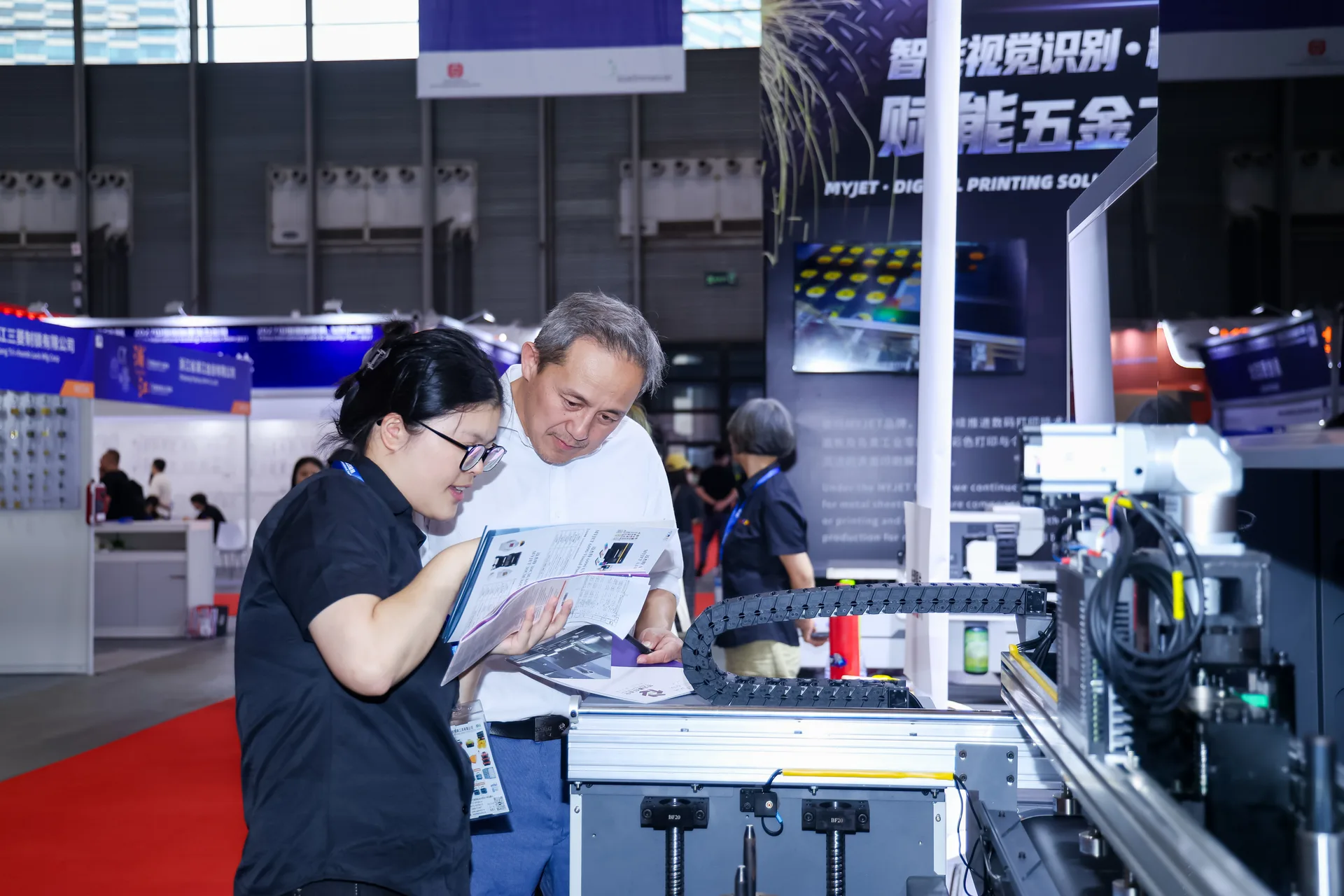
The next step is not another catalog. It is a conversation with the factories that can meet the grade you just wrote down. CIHS 2026, co-organized by Koelnmesse (Beijing) Co., Ltd. and the China National Hardware Association, brings the full hardware spectrum into one venue at SNIEC in Shanghai, from hand tools and fasteners to building hardware and intelligent locking systems.
Register as a visitor before you travel, and bring three documents: your RFQ with the test grade stated, the drawing with tolerances, and a list of the assemblies you need matched. If your purchasing volume qualifies, apply for the Hosted Buyer Programme, which includes matchmaking support against your stated requirements.
Contact the buyer services team at trista.ming@koelnmesse.cn or +86 21 6390 6161-832 to confirm registration and programme eligibility.
FAQ
Is 304 or 316 stainless better for door handles?
It depends on exposure. 304 (EN 1.4301) is adequate for interior and sheltered exterior doors in most climates. 316 (EN 1.4401 or 1.4404) adds molybdenum and resists chlorides better, so it is the safer choice for coastal buildings, pool enclosures, and locations where de-icing salts reach the door. Neither grade compensates for a poor surface finish; passivation and coating quality decide the outcome as much as the alloy does.
What does EN 1670 grade 3 actually prove?
It proves the hardware reached a defined corrosion resistance class under neutral salt spray testing to ISO 9227, in this case 96 hours. It does not prove a service life, and it says nothing about performance in a specific atmosphere. Use the grade to compare products tested the same way, then match the grade to the environment rather than to the price.
How many cycles should a commercial lever handle be rated for?
The answer is the EN 1906 use category, not a single number. Category selection depends on traffic: a residential entrance and a hospital corridor do not carry the same duty. Ask the supplier to state the EN 1906 grade and provide the test report, then confirm that the tested configuration matches your door leaf and fixing pattern.
Can the same hardware be used on fire doors and standard doors?
Only if the specific assembly has been tested. Fire performance under EN 1634-1 applies to the complete door assembly, including hardware, closer, and seals. A handle or hinge that performs well on a standard door is not qualified for a fire door by similarity. Request the test report for the assembly you intend to build.
Why do two suppliers quote different prices for the same handle drawing?
Usually because the quotes describe different products. Alloy grade, wall thickness, coating thickness, forming route, test scope, and packaging all move the unit price, and a supplier who omits one of them is quoting a lower specification. Fix every variable in the RFQ before comparing numbers.
References
[1] EN 1670:2007, “Building hardware. Corrosion resistance. Requirements and test methods,” European Committee for Standardization, 2007.
[2] ISO 9227:2022, “Corrosion tests in artificial atmospheres. Salt spray tests,” International Organization for Standardization, 2022.
[3] EN 1906:2012, “Building hardware. Lever handles and knob furniture. Requirements and test methods,” European Committee for Standardization, 2012.
[4] EN 1935:2002, “Building hardware. Single-axis hinges. Requirements and test methods,” European Committee for Standardization, 2002.
[5] EN 12209:2016, “Building hardware. Locks and latches. Mechanically operated locks, latches and locking plates. Requirements and test methods,” European Committee for Standardization, 2016.
[6] EN 14351-1:2006+A2:2016, “Windows and doors. Product standard, performance characteristics. Part 1: Windows and external pedestrian doorsets,” European Committee for Standardization, 2016.
[7] EN 1627:2011, “Pedestrian doorsets, windows, curtain walling, grilles and shutters. Burglar resistance. Requirements and classification,” European Committee for Standardization, 2011.
[8] EN 1634-1:2014+A1:2018, “Fire resistance and smoke control tests for door and shutter assemblies. Part 1: Fire door and shutter assemblies,” European Committee for Standardization, 2018.
[9] Directive 2011/65/EU on the restriction of the use of certain hazardous substances in electrical and electronic equipment, European Parliament and Council, 2011.
Contact us
-

Ms. Trista Ming
Tel.: +86 21 6390 6161 ext. 832
Trista.ming@koelnmesse.cnMr. Edward Gao
Tel: +86 10 6590 7766-765
Fax: +86 10 6590 6139
Edward.Gao@koelnmesse.cn