


Sustainable Building Hardware: A Buyer’s Sourcing Guide
Sustainable building hardware is no longer a finish choice. Green construction projects now ask hardware to carry evidence: recycled content, low-emission coatings, durable performance, repairability, and a clear path back into material recovery. That shift changes how buyers specify and source handles, hinges, locks, connectors, fasteners, and architectural fittings. A product that looks green in a brochure can fail a project review if the supplier cannot connect the claim to a test report, a material declaration, or a production batch. The practical response is to treat sustainability as a specification and sourcing process, not a label. This guide shows what to request, what to verify, and where the real opportunities sit for international buyers.
What Green Construction Demands from Building Hardware
Green construction moves the buyer’s attention from appearance to performance. A project team may start with a design intent such as lower embodied carbon, healthier indoor air, or a longer service life. The hardware specification then has to show how each fitting supports that intent without creating a new failure point. A recycled aluminum handle is useful only when the alloy, finish, and fixing method still meet the door’s duty cycle. A low-emission coating is useful only when it survives cleaning, abrasion, and outdoor exposure.
The demand arrives through several project pressures at once. One is material transparency: the buyer needs to know what the product contains and where the material came from. Another is durability: green projects often justify a higher first cost through longer replacement intervals and lower maintenance. A third is circularity: the product should be separable, repairable, or recoverable at end of life. These pressures do not replace the basic requirements of strength, fit, corrosion resistance, and safety. They add a documentation layer on top.
| Project pressure | Hardware implication | What to verify |
|---|---|---|
| Lower embodied carbon | Recycled aluminum, lower-carbon steel, recycled content in zinc and plastics | Mill certificate, recycled content by batch, alloy grade, supplier declaration |
| Healthier indoor spaces | Low-emission coatings, low-volatile organic compound (VOC) finishes, material health declarations | Safety data sheet (SDS), emissions test report, cure schedule, film thickness |
| Longer service life | Corrosion resistance, cycle testing, repairability, spare parts availability | Test method and conditions, warranty terms, replacement part list |
| Circularity | Mono-material design, detachable fixings, recyclable components | Disassembly review, material mix, coating compatibility, take-back options |
| Retrofit and reuse | Compatible dimensions, adapters, finish matching, batch consistency | As-built survey, sample fit, color and gloss tolerance, production batch record |

The buyer’s task is to separate a project requirement from a marketing phrase. “Sustainable” can mean recycled content, lower emissions, longer life, or all three. Each meaning needs a different piece of evidence. When the requirement is unclear, the supplier will often answer with the broadest claim available. A precise request produces a more useful answer.
The Evidence Trail That Makes a Green Claim Credible
A green claim becomes useful when the buyer can see its boundary. The same words can describe a product, a factory, or a company policy. A certificate issued to a factory does not prove that a specific batch used recycled material. A laboratory sample does not prove that the production line can hold the same finish. A material declaration does not prove that the installed hardware will meet the door’s cycle requirement. The evidence trail has to connect the claim to the object being purchased.
Start with the product level. Ask for the exact model, material grade, coating system, and test method. Then move to the batch level. Ask how the supplier records recycled content, material origin, and production date. Finally, ask about the factory level. A management system certificate can show that a process exists, but it does not replace a product test. The strongest supplier response will separate these levels instead of merging them into one page of green language.
| Supplier claim | Evidence to request | What it can prove | What it cannot prove |
|---|---|---|---|
| Recycled aluminum | Recycled content percentage, alloy grade, mill certificate, chain-of-custody record | The declared material input for a stated batch | That every future batch will use the same input |
| Low-VOC coating | SDS, emissions test, cure schedule, film thickness record | The coating chemistry and tested emission profile | That the coated part will perform in every use condition |
| Corrosion resistant | Salt spray test report, substrate, pre-treatment, test duration | Performance under the stated test conditions | That the product will resist every chloride or chemical exposure |
| Sustainable wood component | Species, chain-of-custody certificate, moisture content | Legal sourcing and material identity for the declared component | That the hardware fixed to it will meet the same environmental claim |
| Recyclable product | Material separation review, coating and fastener compatibility | A feasible recovery path under defined conditions | That local collection and recovery systems will accept it |
A useful rule is to ask what the evidence does not cover. That question exposes the difference between a product test and a company statement. It also helps the buyer decide whether the gap matters for the project. A gap in recycled content may be acceptable for an interior fitting with a long service life. The same gap may be unacceptable for a project with a fixed material credit.
Where Sustainable Hardware Creates Buyer Value
The commercial case for sustainable building hardware is strongest when the environmental benefit and the buyer’s operating benefit point in the same direction. Durable hardware reduces replacement labor, access equipment, and disruption. Repairable hardware extends the life of a door or window assembly that would otherwise be scrapped for a small failed part. Finish systems that resist cleaning and corrosion protect the appearance of a building entrance and reduce callbacks. These are practical outcomes, not abstract green credentials.
Retrofit work is a large opportunity. Many buildings will not be rebuilt, but their doors, windows, locks, and fittings will be upgraded. Hardware that matches existing dimensions, accepts modern cylinders, or allows a finish refresh can avoid the waste of a full assembly replacement. The buyer should check the as-built condition before selecting a “drop-in” solution. A small difference in backset, spindle size, or fixing centers can turn a simple retrofit into a fabrication job.
Circularity also creates value when it is designed into the product. A handle with a removable cover and a common fastener is easier to repair than a bonded assembly. A lock with a replaceable electronic module can avoid discarding the entire fitting when the electronics fail. A finish that can be renewed without stripping the substrate can extend service life. These features are easier to specify at the sample stage than to add after the order.

The buyer should compare options on total cost of ownership, not only unit price. A lower-priced product can become expensive if it needs early replacement, fails a project inspection, or creates a maintenance call. A higher-priced product can be the better choice when it carries the right evidence and reduces risk. The comparison should include the cost of documentation, testing, spare parts, and replacement access.
Material and Finish Choices That Support Green Building Goals
Material selection is where many green claims are won or lost. The buyer does not need a perfect material. The buyer needs a material that fits the application and has evidence behind it. Recycled aluminum is a strong option for handles, profiles, and window hardware because it is durable and can be recycled again. The alloy and the anodizing or coating quality still determine whether the finished part will resist wear and corrosion. A high recycled content does not rescue a poor surface treatment.
Steel with a lower embodied-carbon profile is useful for hinges, connectors, and fasteners where strength matters. The buyer should check the mill certificate, the coating system, and the risk of hydrogen embrittlement in high-strength grades. Stainless steel remains a practical choice for exterior, coastal, and wet areas because it combines long service life with low maintenance. The grade, passivation, and chloride exposure still need to match the project.
Powder coating is often a good fit for metal hardware because it produces a durable film with low overspray. The result depends on pre-treatment, cure, and film thickness. A coating that looks good at delivery can fail if the pre-treatment is weak or the cure is incomplete. Physical vapor deposition (PVD) offers a wear-resistant decorative finish for high-touch hardware and can avoid some plating waste, but adhesion and batch color control still need testing. Bio-based composites can reduce fossil content in interior parts, provided moisture, ultraviolet exposure, fire performance, and dimensional stability are addressed.
| Option | Best fit | Green construction case | Buyer checks |
|---|---|---|---|
| Recycled aluminum | Window and door hardware, handles, profiles | Durable, recyclable, can carry recycled content | Alloy, recycled content, anodizing quality, fixing strength |
| Lower-carbon steel | Hinges, connectors, fasteners | Strength, recyclability, potential lower embodied carbon | Mill certificate, coating, hydrogen embrittlement risk |
| Stainless steel | Exterior, coastal, wet areas | Long service life, low maintenance, recyclable | Grade, passivation, chloride exposure, finish consistency |
| Powder coating | Interior and exterior metal hardware | Durable film, low overspray, color flexibility | Pre-treatment, cure, thickness, adhesion, color match |
| Physical vapor deposition | Decorative and high-touch hardware | Wear resistance, reduced plating waste | Adhesion, abrasion, batch color, substrate preparation |
| Bio-based composite | Interior trim, handles, decorative parts | Lower fossil content, design flexibility | Moisture, ultraviolet, fire, dimensional stability |

No material is automatically green. The buyer should ask where the material works, where it fails, and what evidence supports the difference. That approach keeps the specification honest and gives the supplier a clear brief.
How to Spot Greenwashing Before You Place an Order
Greenwashing rarely appears as an obvious lie. It usually appears as a vague claim, a missing boundary, or a document that does not match the product. The buyer can catch most of it with a short review. First, check whether the claim is product-specific. A company page about sustainability is not a product declaration. Second, check whether the evidence is current and covers the exact factory or batch. Third, check whether the test conditions match the application.
Watch for these warning signs:
The supplier uses “eco,” “green,” or “sustainable” without naming the material, the test, or the improvement.
A certificate covers the company but not the product or production site.
A test report has no sample identity, date, or test conditions.
Recycled content is claimed without a batch record or mill certificate.
“Recyclable” is claimed without a disassembly path or material separation review.
The supplier cannot explain what the claim does not cover.
A short verification plan is more useful than a long questionnaire. Ask for the product datasheet, the material declaration, the test report, and one production batch record. Compare the model number and material grade across the documents. If the supplier cannot align them, the claim is not ready for a project submission. A factory visit or a third-party audit can add confidence, but it does not replace the document check. The documents show what the supplier is willing to stand behind.
A Practical RFQ for Sustainable Hardware
A request for quotation (RFQ) should turn the green requirement into a field the supplier can answer. Generic language such as “please quote sustainable hardware” invites a generic response. A better RFQ names the product, the material, the evidence, and the acceptance condition. It also asks the supplier to declare what is not available. That declaration is useful because it prevents a later surprise during project review.
| RFQ field | What to specify | Why it matters |
|---|---|---|
| Product and application | Category, model, door or window type, duty cycle, indoor or outdoor use | Prevents a decorative fitting from being quoted for a high-use application |
| Material and recycled content | Alloy or grade, recycled content target, mill certificate, batch record | Makes the material claim traceable to the supplied product |
| Finish and emissions | Coating system, color, gloss, VOC or emissions requirement, test method | Connects appearance and indoor air requirements to a verifiable finish |
| Performance evidence | Cycle test, salt spray, adhesion, abrasion, load test, test conditions | Shows whether the product meets the use condition, not just the catalogue description |
| Certification and traceability | Required scheme, scope, expiry, factory name, batch identification | Separates a valid product claim from a company-level statement |
| Packaging and recovery | Rust prevention, recyclable packaging, spare parts, take-back or disassembly information | Supports circularity and reduces damage and waste after shipment |
The RFQ should also ask for a sample that matches the production process. A laboratory sample can prove that a finish is possible. It does not prove that the production line can repeat it. The buyer should compare the sample’s color, gloss, film thickness, and fixing quality with the specification. If the supplier cannot explain the difference between the sample and the production batch, the buyer should treat the claim as unproven.
Sourcing Strategy for International Buyers
International buyers face a practical gap between a green specification and a supplier’s ability to document it. The gap is often language, not intent. A factory may have the test report but not an English summary. A mill may issue a certificate that the trading company does not forward. A coating supplier may change a formulation without telling the hardware supplier. The buyer’s sourcing process should make these handoffs visible.
Start with a shortlist of suppliers that already serve projects with documented material requirements. Ask for the evidence package before the price negotiation. A supplier that cannot produce the package at the inquiry stage is unlikely to produce it after the order. Then test the sample against the stated use condition. A door handle should be cycled, a lock should be operated, and a coating should be cleaned and abraded in a way that matches the project. The test does not need to be complex. It needs to be relevant.
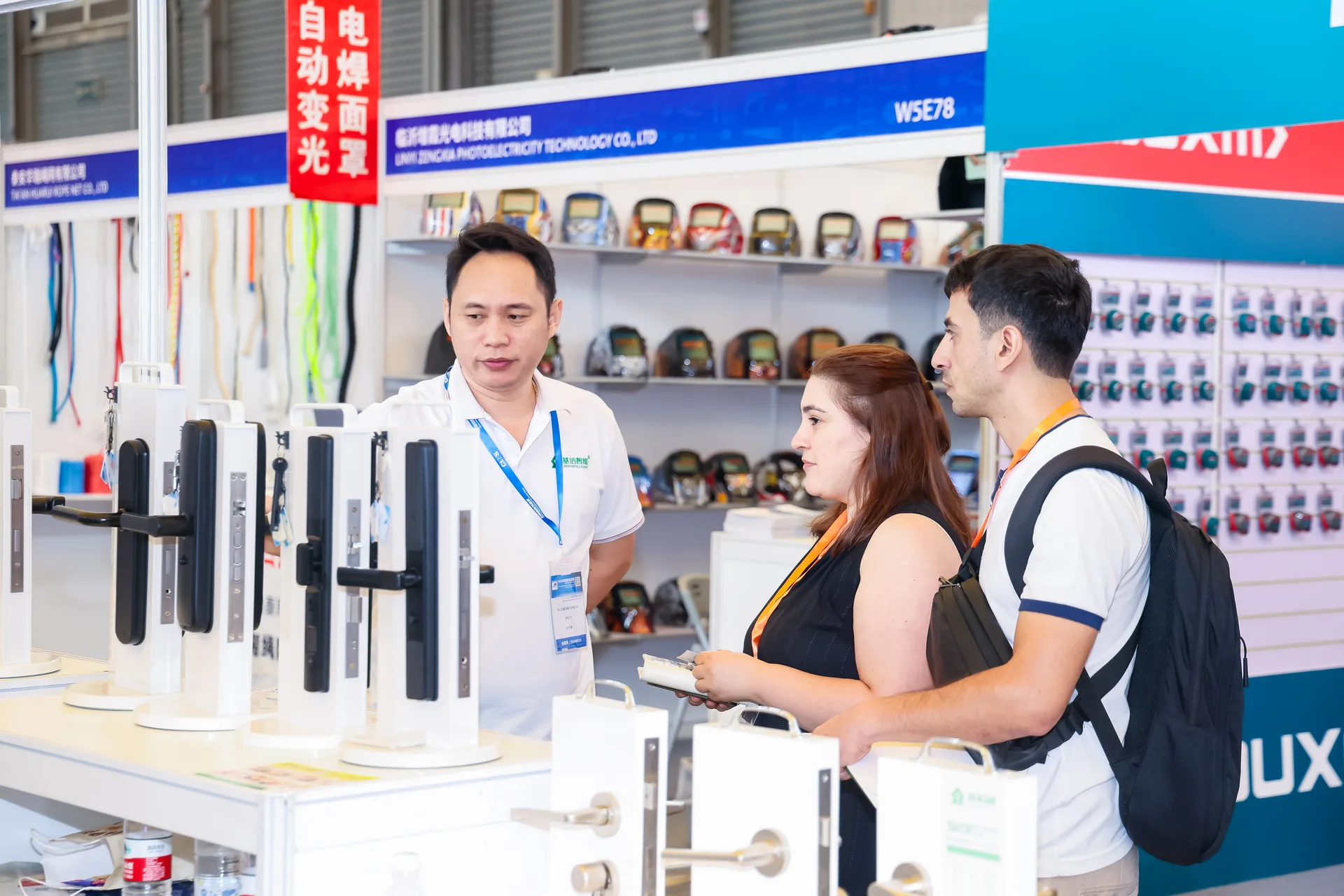
Use a pilot order to check batch consistency. Compare the recycled content record, the color, the gloss, and the fixing quality across the pilot and the first production run. If the supplier changes a material or a coating, ask for a new declaration and a new sample. A trade fair can shorten the shortlist because it lets the buyer see the product and meet the team. It does not replace the sample test or the document review. The strongest sourcing plan combines both.
Turn Your Green Hardware Brief into a Sourcing Plan
Bring a clear brief to the next sourcing conversation. Name the product category, the target market, the certification or evidence requirement, the recycled-content target, the finish, the expected volume, and the project timeline. That brief helps a supplier answer with the right product and the right documents. It also helps the buyer compare responses without decoding a page of vague green language.
Send your brief to trista.ming@koelnmesse.cn or call +86 21 6390 6161-832. The CIHS team can help you shortlist exhibitors, plan a sourcing route, and prepare the questions that matter before you place an order.
FAQ
What counts as sustainable building hardware?
Sustainable building hardware is hardware that can support a project’s environmental goal with evidence. That may mean recycled content, a low-emission finish, a long service life, repairability, or a feasible recovery path. The important part is the link between the claim and the product. A handle made from recycled aluminum is not automatically sustainable if the finish fails early or the fixing cannot be repaired. Buyers should ask which specific benefit the product delivers and what test or declaration supports it.
Do recycled-content hardware products cost more?
Not always, but the price can differ by material, finish, and documentation. Recycled aluminum may carry a premium in some markets, while a lower-carbon steel grade may be closer to the conventional option. The buyer should compare total cost, including replacement intervals, maintenance, and project review risk. A lower unit price can lose its advantage if the product needs early replacement or cannot supply the evidence the project requires. Ask for a like-for-like quote with the same grade, finish, and test package.
Which certifications should buyers ask for?
The right certification depends on the market, the product, and the project’s green building requirement. Buyers should ask for the scheme name, the certificate scope, the factory name, the expiry date, and the product or batch it covers. A management system certificate is not the same as a product test. A material declaration is not the same as a performance report. The buyer should match the document to the claim and confirm that the certificate covers the actual production site.
How can buyers verify a supplier’s green claim without a factory visit?
Start with a document set: product datasheet, material declaration, test report, and one batch record. Check that the model, material grade, and factory name match across the documents. Ask the supplier to explain what the evidence does not cover. Request a production sample and compare it with the specification. If the claim is critical, use a third-party test or a remote audit. A factory visit can add confidence, but a clear document trail and a relevant sample often reveal more than a short tour.
Contact us
-

Ms. Trista Ming
Tel.: +86 21 6390 6161 ext. 832
Trista.ming@koelnmesse.cnMr. Edward Gao
Tel: +86 10 6590 7766-765
Fax: +86 10 6590 6139
Edward.Gao@koelnmesse.cn